Abstract
How does seemingly spontaneous communal violence become politically organized, and how does state response shape this process as violence unfolds? This article uses event-structure analysis to examine the 2008 anti-Kurdish riots in Altınova, Turkey. Drawing on reports on the Altınova riots produced by human rights organizations and twenty news articles drawn from mainstream, nationalist, Islamist, and left-wing newspapers, the analysis reconstructs the temporal and causal relationships among mass mobilization, extreme-right political intervention, and state response across successive attack cycles. The findings distinguish between the conversion and re-production of collective violence. In initial attack cycles, extreme-right actors did not create mass mobilization from scratch but seized opportunities generated by triggering events and collective gatherings to convert already mobilized crowds into targeted violence. In subsequent cycles, as broader mass mobilization subsided, organized actors became more directly involved in gathering participants, directing mobilization, and reproducing violence. State response also changed across the sequence, combining non-intervention during larger crowd mobilizations with selective repression of organized actors. These findings show that spontaneity, political organization, and state response are not fixed characteristics of riots but become consequential in different combinations at different stages of communal violence.
-
Keywords: Communal Violence; Ethnic Riots; Event-Structure Analysis; Extreme Right; Collective Violence
Introduction
Since the 1980s, ethnic, racial and religious forms of communal violence have emerged with striking intensity across many parts of the world. From ethnic cleansing in Bosnia to the Rwandan genocide (
Mamdani, 2001;
Petersen, 2002), to deadly riots in Indonesia (
Sidel, 2006) to communal violence in India (
Brass, 2003; Wilkinson, 2004), existing ethnic, religious, and racial boundaries and hierarchies have been violently challenged, unmade, or remade through collective violence and ethnic riots.
Despite major differences in their scale, type, and intensity, ranging from localized riots to ethnic cleansing and genocide, many of these episodes have shared a particularly troubling sociological feature: they involved the direct participation of ordinary civilians in violence against other civilians. Neighbors have attacked neighbors, and people with little or no prior experience of organized violence have participated in riots, assaults, and, in some cases, killings. Consequently, how ordinary civilians come to participate in murderous violence against other civilians has emerged as one of the fundamental questions in the study of societal ethnic violence. This question has generated particular interest in studies of communal violence, defined as “[v]iolence between members of different ethnic groups that does not directly involve arms of the state on either side” (
Fearon & Laitin, 1999, p. 9). Precisely because civilians rather than the state or armed rebels occupy center stage, communal violence provides a particularly revealing setting for examining popular participation in ethnic and religious violence. Yet this apparent centrality of civilian actors poses an important paradox. Foundational studies of ethnic riots and communal violence have demonstrated that such episodes are far from fully spontaneous eruptions of popular emotions, ethnic tensions, or mass grievances. Rather, ostensibly civilian violence has frequently involved the organization and intervention of political actors (
Brass, 2003;
Tambiah, 1996;
Tilly, 2003) and has been profoundly shaped by the decisions, and sometimes deliberate inaction of state authorities (
Brass, 2003; Wilkinson, 2004;
Griffin, 1993). Understanding civilian participation, therefore, requires examining not only the motivations of ordinary participants but also the processes through which popular mobilization is organized, directed, facilitated, or constrained by political and state actors.
Assessing the relative roles of these different actors and distinguishing the spontaneous from the organized dimensions of collective violence, also poses a significant methodological challenge. To determine the relative roles of popular mobilization, political organization, and state action (or inaction), and, relatedly, to assess the extent to which particular episodes of violence are spontaneous or organized, scholars, so far, have relied on a variety of methodological strategies, ranging from detailed case studies and comparative analysis (
Horowitz, 2001) to ethnographies (
Das, 1985) and statistical analysis (Wilkinson, 2004). Although these approaches have generated several important insights into the actors, mechanisms, and contexts underlying communal violence, they are less equipped to systematically analyze and reconstruct how actions or inactions by different actors become linked over time within a particular violent episode, and in doing so, to identify structural patterns and regularities that emerge during the unfolding of these incidents in event time.
In this paper, building on
Griffin (1993), I will use event-structure analysis to explain emergence and production of communal violence. By systematically reconstructing the temporal and causal relations among events, event-structure analysis makes it possible to examine how mass mobilization, organized intervention, and state response interact across successive stages of communal violence. Rather than treating spontaneity and organization as mutually exclusive characteristics of an entire riot (also see
Horowitz, 2001), an event-structural approach allows us to investigate how relatively spontaneous and organized forms of action may emerge, interact, and change within the unfolding trajectory of a single violent episode.
To demonstrate the utility of this tool, I use the 2008 anti-Kurdish riots in Altınova, Turkey, as a case study. Erupting in Altınova, a small town on Turkey’s western coast on September 30, 2008, the riots were relatively limited in their lethality, as no one was killed in this episode of anti-minority attacks, but marked an important turning point in ethnic relations during a period of heightened political contestation surrounding the Kurdish question (see
Kumral, 2024). The riots erupted during the early phase of the right-wing populist rule of the Justice and Development Party (AKP), which combined neoliberal economic policies, strategic welfare provision, and the selective political inclusion of previously marginalized constituencies, including Kurdish voters, in an effort to consolidate its still-fragile electoral and hegemonic bloc. The riots thus unfolded at a moment when the AKP was attempting a limited political opening toward the Kurdish population while simultaneously facing a growing nationalist challenge from the far-right Nationalist Action Party (MHP).
During the riots, nationalist crowds attacked the homes and businesses of Kurdish residents, damaging homes, businesses, and vehicles. Although ordinary residents participated directly in the violence, organized extreme-right actors also became increasingly involved, while state authorities repeatedly failed to intervene against the attacks. The shifting roles of ordinary residents, organized political actors, and state authorities over the course of the riots make Altınova a particularly useful case for examining how spontaneous and organized forms of violence interact as communal violence unfolds.
The Altınova case also speaks to the growing literature on right-wing and authoritarian populism in the Global South, which has examined the electoral foundations, political strategies, and regime transformations associated with populist governments in such diverse contexts as Turkey, India, Brazil and the Philippines (
Akçay, 2021;
Heller, 2020;
Heydarian, 2017;
Kumral, 2024). The present study examines another dimension of right-wing populist rule by drawing attention to its relationship to far-right mobilization and violence on the ground. More specifically, the analysis shows how selective state inaction under right-wing populist rule can create political opportunities for organized far-right actors to convert broader popular mobilization into targeted ethnic violence and subsequently reproduce that violence. In this sense, the event-structure analysis of the Altınova riots connects transformations in national politics under right-wing populism to the micro- and meso-level processes through which ethnic violence is produced locally, thereby providing a distinctive event-centered lens for understanding the contemporary global resurgence of the political right and ethnic violence.
From Spontaneous to Organized Violence: Riots, Political Organization and State Response
A longstanding debate in the literature on communal violence and ethnic violence pertains to the extent to which these violent events are spontaneous eruptions of popular hostility or politically organized events.
Petersen (2002), for example, shows how emotions can motivate ordinary people to participate in murderous ethnic cleansing even without centralized direction. From this perspective, triggering events can activate preexisting resentments and transform them into collective violence. By contrast, research on collective violence and ethnic riots has drawn attention to organizations and actors who specialize in organizing and directing collective violence and ethnic riots, such as “violent specialists,” “riot specialists,” and those who direct and organize violence (
Brass, 2003;
Tambiah, 1996;
Tilly, 2003). For instance, various studies draw attention to the political incentives and organizational processes leading to communal violence (
Dhattiwala & Biggs, 2012; Wilkinson, 2004; see also
De Leon et al., 2009). In his seminal work on communal violence in India,
Brass (2003) argues that Hindu-Muslim riots are “dramatic productions…that are meant to appear spontaneous” (p. 358), demonstrating the highly organized character of this seemingly spontaneous form of violence.
In his comprehensive study of deadly ethnic riots across the world,
Horowitz (2001) offers a more complicated picture, stating “…most riots seem to be unorganized, partially organized and partially spontaneous, or organized by ephemeral leadership that springs up to respond to events as they happen, often suddenly.” (
Horowitz, 2001, p. 225) In this framework, political actors therefore need not manufacture collective violence from the outset. Hence, different from the approaches that underline the organized spontaneity of riots, this approach underlines the spontaneous organization. Yet, as
Horowitz (2001) also notes, even the form and level of organization within the same event may differ. Then, going beyond the question of whether riots are spontaneous or organized, one can ask how mass mobilization and political organization become connected as violence unfolds and how this impacts levels of spontaneity and organization within a single riot.
In addition to political organization, another important dynamic that determines the eruption and fatality of communal violence is state response. Although communal violence is not a form of state-perpetrated violence, detailed studies demonstrate how state failure to respond and stop the riot mobs was a central characteristic of various incidents of communal violence (
Brass, 2003;
Griffin, 1993; Wilkinson, 2004). Whereas explanations of ethnic conflict and rebellion often emphasize weak states unable to contain violence, research on communal riots shows that authorities may possess the capacity to intervene but choose not to do so. Wilkinson (2004), in particular, demonstrates how political incentives shape state inaction - whether state authorities protect minorities and repress violent crowds. Similar patterns extend beyond ethnic riots:
Franzosi (1995), for example, shows how patterns of police response shaped fascist violence in Italy. State non-intervention, from this perspective, is not merely an absence of action but part of the process through which violence develops.
Furthermore, these two dynamics, i.e. political organization and state response, may also be interdependent. Failure to suppress an initial attack can facilitate escalation and signal to the masses that further violence will be tolerated, thereby creating opportunities for organized actors to reproduce violence after the original mass mobilization has subsided. Riots are therefore better understood as sequential processes rather than unitary events that are either spontaneous or organized. Explaining their development requires attention not simply to whether or to what extent masses, political organizations, and states contribute to violence, but to when and how their actions become causally consequential within an unfolding sequence of mobilization, violence, organization, and state response.
Historical and Local Context: Right-Wing Populism, Political Contestation, and Nationalist Mobilization
The Altınova riots erupted in 2008, in a historical context marked by the early phase of the right-wing populist rule of the Justice and Development Party (AKP), heightened political contestation surrounding the Kurdish question in Turkey, and rising anti-Kurdish violence (see
Ergin, 2014;
Gambetti, 2007;
Kumral, 2017). During this early period, the AKP combined neoliberal economic policies, strategic welfare provision, and the discursive political inclusion of the Kurdish population to sustain its still-fragile electoral and hegemonic bloc. In September 2008, the same month as the riots in Altınova, the AKP initiated a democratic opening process that promised to expand, at least partially, the existing rights and liberties of Kurdish citizens in the democratic sphere, in part to secure Kurdish electoral support. At the same time, the pro-Kurdish Democratic Society Party (Demokratik Toplum Partisi, DTP), together with allied leftist organizations and movements, had gained a significant parliamentary presence following the 2007 elections. Pro-Kurdish and progressive political forces, long marginalized within Turkey’s political system, were thus able to emerge as a significant opposition bloc in parliament, challenging the limits of the populist government’s limited political opening. This period, however, also witnessed a growing nationalist challenge to the democratic opening process, led by the far-right Nationalist Action Party (Milliyetçi Hareket Partisi, MHP). The MHP strongly opposed the extension of Kurdish cultural rights. Amid this growing nationalist mobilization, the far right increased its vote share by 5.9 percentage points nationwide in the 2007 general elections. Its rise was even more pronounced in Altınova, where its share of the vote increased from 17 percent in 2002 to 26 percent in 2007.
At the time of the riots, Altınova, a rural district on Turkey’s western coast, included a sizeable population of Kurdish migrants, many of whom had arrived during the 1990s and 2000s. By 2010, Kurdish migrants were estimated to constitute approximately 8.7 % of Altınova’s population and were concentrated in areas locally identified as “Kurdish neighborhoods.” Human rights reports documented growing tensions between Kurdish migrants and other residents before the riots. Complaints frequently centered on highly visible markers of Kurdish identity, including speaking Kurdish in public, displaying Kurdish colors at weddings, and allegedly failing to display Turkish flags, while some accounts also pointed to economic resentment toward relatively prosperous Kurdish families (İHD, 2008;
Mazlum-Der, 2008). Yet these tensions had produced little overt communal violence before September 2008. Apart from an attack on a Kurdish-owned shop approximately one month earlier, the town had experienced no reported attempted lynchings or comparable episodes of anti-Kurdish collective violence. The riots therefore emerged against a background of growing ethnic tension and nationalist political mobilization, but not an established local pattern of communal violence.
Methods: Event-Structure Analysis
To analyze the Altınova riots, this paper uses event-structure analysis, a computer-assisted method of temporal analysis for interpreting qualitative narrative sequences (
Griffin, 1993). A key strength of event-structure analysis is its ability to link “event time” to the larger macro-historical context. Put differently, event structure analysis shows how micro- and meso-level dynamics revealed through case study analysis can be analyzed in relation to broader macro-level processes of social change. In this particular study, event structure analysis enables us to see how the detailed event-level dynamics of an ethnic riot are situated within the historical context of right-wing populist rule and ethno-political contention. The event structure analysis begins by entering a chronology of events into the computer program ETHNO, which generates a series of yes/no questions about causal relationships among events. The analyst then uses substantive knowledge and theoretical judgment to construct a directed causal diagram representing the underlying structure of the event (
Griffin, 2007, p. 5). Through the construction of a “generalized event structure,” the method can also facilitate “rigorous case comparisons” (
Brown, 2000, p. 664) and the identification of more general patterns across sequences of action.
Based on the original narrative of the Altınova riots –an ordered chronology of the actions and events surrounding the violence – I developed a “causal diagram of the logical structure of action” representing my interpretation of the causal connections among events in the temporal sequence (
Griffin, 1993, p. 1107). Riots, however, do not typically consist of a single violent encounter but of multiple episodes of violent incidents (see
Horowitz, 2001). The Altınova riots similarly involved several distinct episodes of violence, which I refer to as ‘attack cycles,’ whose emergence and development were shaped in part by how preceding cycles unfolded. I therefore construct separate event structures for the two days of rioting and then develop a generalized event structure to identify recurrent as well as changing patterns across days and attack cycles.
Constructing a reliable original narrative poses a particular challenge for the analysis of riots. Such events involve numerous actors and actions unfolding over an extended period, and there is rarely a single uncontested account of what occurred. I therefore triangulated multiple sources to construct the “raw narrative” underlying the event-structure analysis. These sources include reports on the Altınova riots produced by two human rights organizations and twenty news articles drawn from daily newspapers that report the events.
1 To overcome potential biases, I included an event in the sequence only when it was reported by at least two different sources.
The analysis proceeds in two stages. I first present separate event structures for the two days of rioting in Altınova, identifying the successive attack cycles and the relationships among the actions of ordinary participants, organized political actors, and state authorities within each day. I then construct a generalized event structure across the two days and their constituent attack cycles to identify recurrent and divergent patterns in the development of violence. This comparison allows us to examine how the relative roles of mass mobilization, political organization, and state response changed as the riots unfolded.
From Mobilization to Violence: The Event Structure of the Altınova Riots
I first present two concrete event structures corresponding to the two days of rioting in Altınova: September 30, 2008 (Day 1), and October 1, 2008 (Day 2). These concrete event structures are derived from the temporal event chronologies based on the narratives provided below.
Day 1: Emergence of Riots
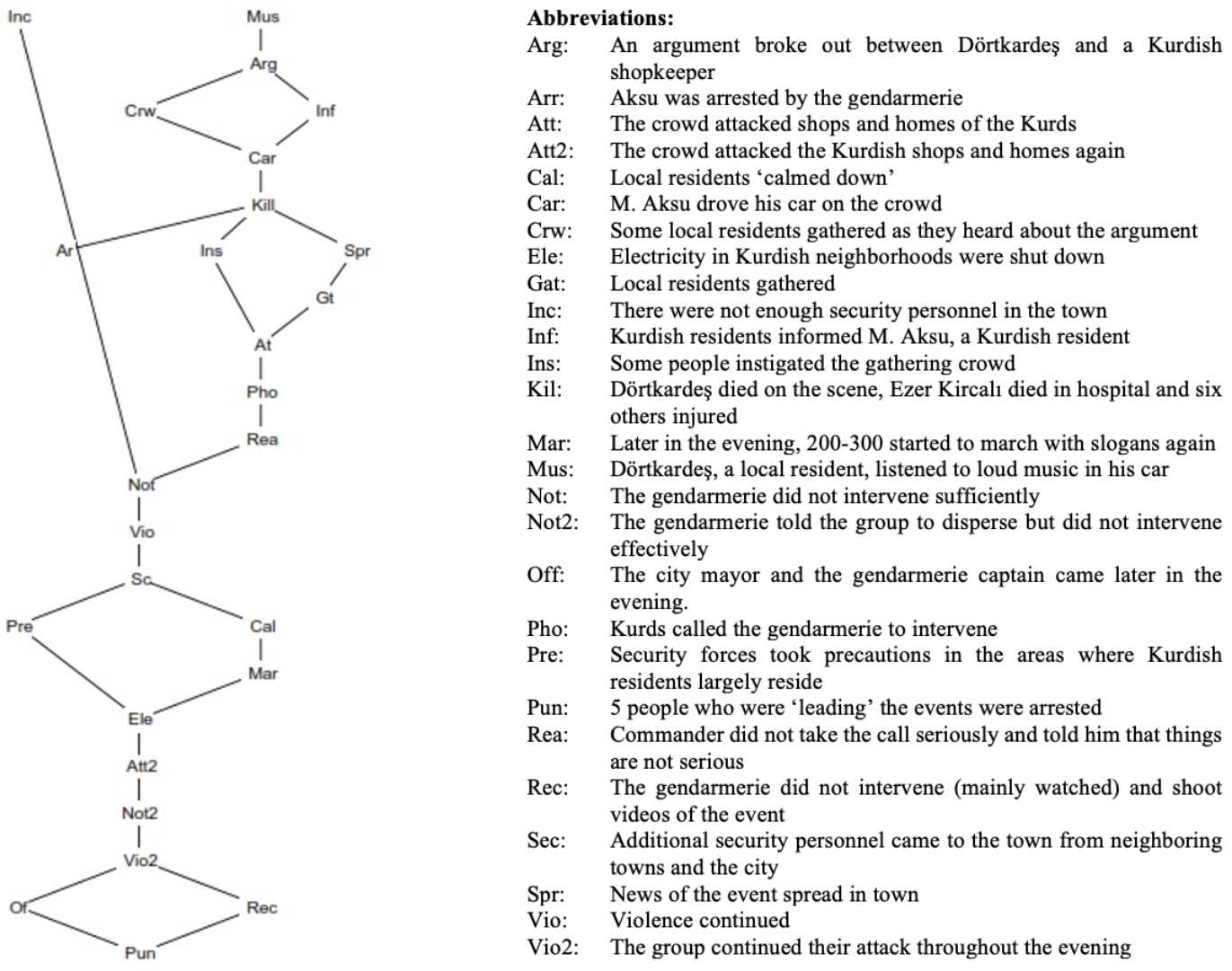
On September 30, the first day of Ramadan, a dispute over loud music escalated into a fight between Kurdish and Turkish residents. Murat Aksu, a Kurdish resident who heard about the fight, arrived at the scene in his van and drove into the crowd, killing two Turkish residents and injuring six others. As Aksu was being arrested by the gendarmerie, news of the incident spread through the town. Shortly afterward, town residents gathered and with the incitement of a group, the angry mob began attacking the homes and shops of Kurdish residents. Kurdish residents who had no involvement in the original fight locked themselves inside their homes and called the security forces for help but the call for help was not taken seriously by the commander. The initial response by the security forces was delayed and insufficient in size. Violence continued and has further escalated. The angry mob did not calm down until additional security forces arrived from neighboring towns. Although none of the available narratives indicates that these additional forces used force or other forms of repression against the crowd, the mob nevertheless calmed down and dispersed following their arrival. The gendarmerie took precautions in the neighborhoods.
Later that evening, once again, a crowd of approximately 200-300 people gathered and marched through neighborhoods where Kurdish residents lived, chanting anti-Kurdish slogans. Electricity to these neighborhoods was cut off, and attacks on Kurdish homes and businesses followed shortly afterward. Security forces/gendarmeries did not intervene to stop the attacks. Although the gendarmerie asked the mob to disperse, its personnel largely stood by, observing and recording the attacks with video cameras. The violence continued and further escalated. Later that evening, government and security officials, including the governor and the captain of the gendarmerie, arrived in town. Individuals identified as having led the attacks were subsequently arrested.
Figure 1 below shows the concrete event structure of the first day of riots
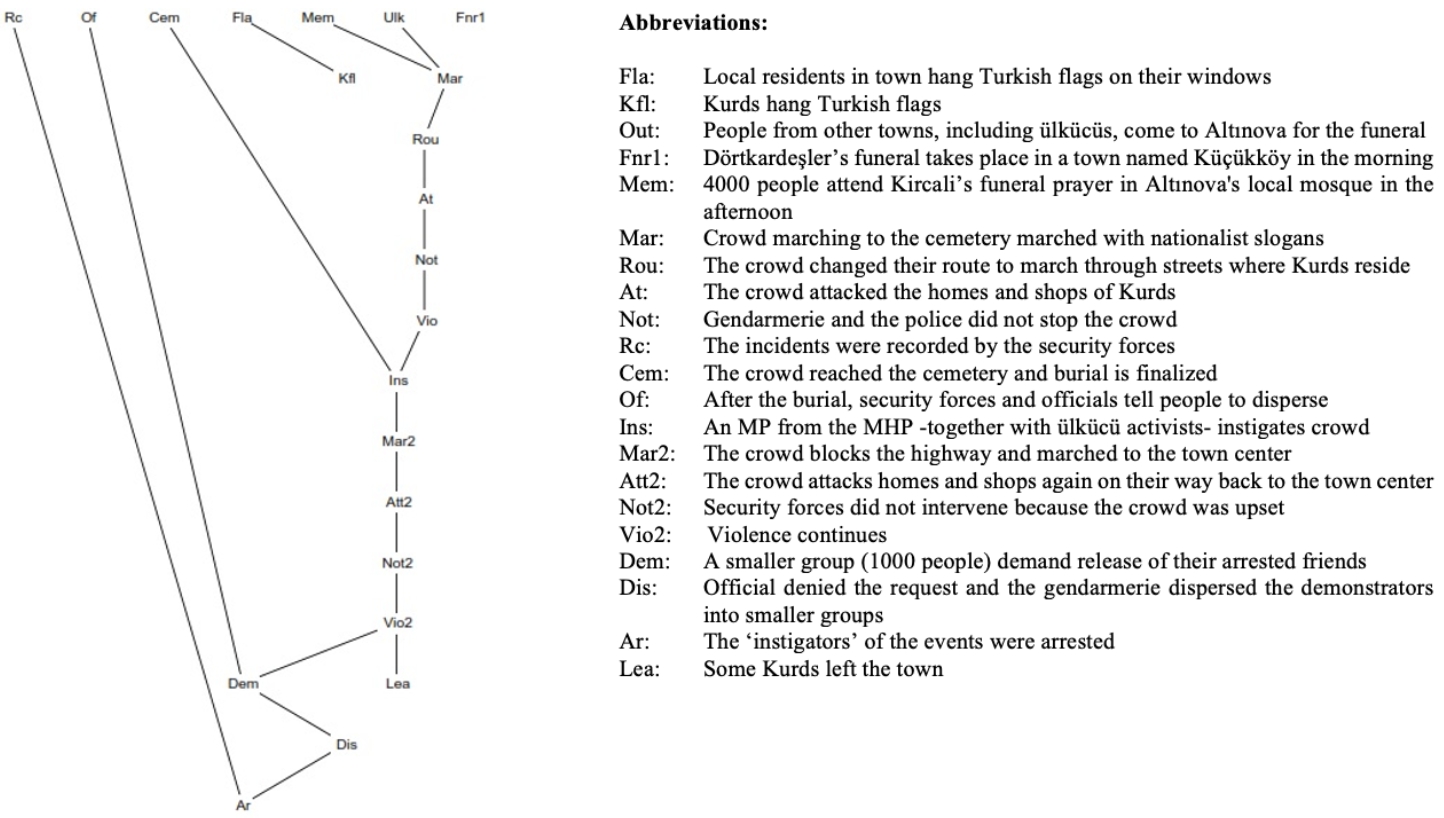
On October 1, 2008, the riots further escalated. It also produced patterns similar to the development of riots on Day 1. Fearing a resurgence of the attacks, some Kurdish residents also hung Turkish flags as a protection. The second day of the riots started with a symbolic demonstration of nationalism by the local residents of Altınova. People hung Turkish flags in their windows. Then, at the afternoon prayer, Ezer Kircali’s funeral ceremony took place in a local mosque with the gathering of four thousand people. After the prayer, the crowd started walking to the cemetery as part of the funeral procession. The procession suddenly turned into a nationalist demonstration whereby the crowd was shouting nationalist and anti-Kurdish slogans while waving a huge Turkish flag in their hands. The crowd participating in the nationalist march was brought together by the funeral prayer, heightened nationalist sentiment among local residents, and the presence of extreme-right militants, many of whom had come from neighboring towns for the funeral.
Instead of following the regular route to the cemetery, the crowd walked through the areas of the town where Kurdish residents dwelled. This resembles how religious processions go through the neighborhood of minorities in India for provoking violence (
Brass, 2003). While passing through these neighborhoods, the attacks started once again. Victim accounts suggest that the attacks were generally undertaken by 200-300 people in the crowd (İHD, 2008). Of course, this does not mean that this “specialized group” was totally independent from the “ordinary folks.” However, the overall story suggests that a specialized group was active in the conversion of the nationalist march into a violent riot. Similar to the attacks on day 1, the police and gendarmerie did not intervene or stop the attacks even though they were present. Later on, the governor stated that they did not stop and tolerated “incidents” since “people were upset” because of the funerals (İHD, 2008). The attacks continued and the crowd eventually reached the cemetery.
After the burial was finalized in the cemetery, the officials told the crowd to disperse peacefully. However, a parliamentary member from the ultra-nationalist MHP gave an instigating speech to the crowd whereby he called on “the people of Altınova” to resist the attempts of “those groups [i.e. Kurds] to dominate the town.” People also recount that the MP was escorted by a group of young extreme right militants some of whom attended the funeral from other towns. Afterwards, another nationalist march started by a group that attended the funeral. The group first blocked the highway and then started another attack against Kurdish homes and shops while marching back to the town center. The security forces did not intervene because they viewed the group as being “upset,” and the group continued their violent demonstration. A group from the violent mob demanded the release of friends who had been arrested. Then, the mob was dispersed by the gendarmerie into smaller groups.
Figure 2 below shows the concrete event structure of the second day of riots.
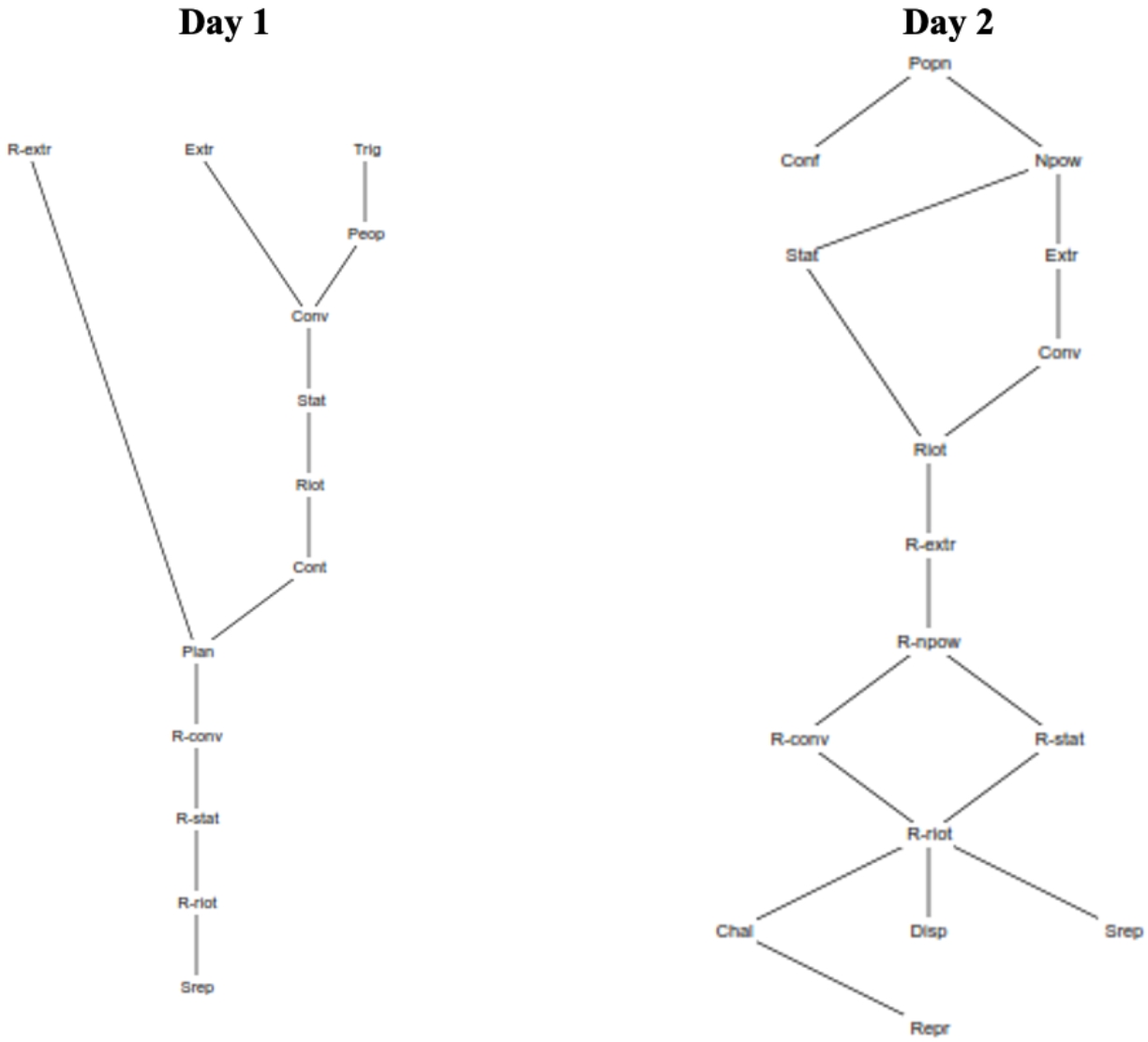
What general pattern emerges from the causal relationships identified across the two days of rioting in Altınova? The generalized event structure brings together the recurrent mechanisms identified in the concrete event structures while preserving their temporal and causal ordering (see
Table 1,
Table 2 and
Figure 3). It allows us to compare successive attack cycles and, in particular, to examine how the relative roles of mass mobilization, extreme-right organization, and state response changed as the riots unfolded.
The analysis shows the importance of organized extreme-right actors, including what
Tilly (2003) calls “violence specialists,” in the production of communal violence. This finding is consistent with studies emphasizing that riots are not simply spontaneous eruptions of mass hostility but are often politically organized and directed (
Brass, 2003; Wilkinson, 2004). Yet the Altınova case also shows that the relationship between mass participation and political organization was not uniform across the riot cycle. Across both days, initial episodes of mobilization had a broader mass character, whereas subsequent episodes became increasingly organized and militant.
In the initial attack cycles of these mass riots, collective gatherings preceded extreme-right intervention. Organized actors did not plan the riots from the beginning or create the initial crowd from scratch. Rather, they became consequential by “converting” already mobilized and angry gatherings into targeted violence. This finding has important theoretical implications, suggesting that extreme-right actors cannot easily produce mass anger or initiate mob violence at their own will; rather, they seize opportunities created by triggering events, heightened tensions, and collective gatherings. The Altınova case therefore qualifies accounts that treat riots as either spontaneous mass eruptions or fully planned political productions. Organized actors can become central to violence without having planned the entire episode from its outset.
Furthermore, the role of organized actors changed as the riots developed. While in the initial phase – the early attack cycles-organized political actors seized opportunities to convert mass eruptions of anger into riotous violence, in later phases they became more directly involved in the re-production of violence after the initial mass mobilization had subsided. In these “organized attacks,” extreme-right actors played a more direct role in gathering crowds, directing marches, and planning violence in advance. Importantly, these more organized attacks involved a greater presence of extreme-right militants and fewer ordinary civilians; they were smaller in size but considerably more violent.
The generalized event structure also provides important insights regarding the role of the state. It reveals that state response was neither simply absent nor uniform. Initial attacks escalated when security forces failed to intervene, supporting arguments that state inaction can play a central role in the development of communal violence (
Brass, 2003; Wilkinson, 2004). In Altınova, this inaction showed selective non-intervention rather than a straightforward lack of state capacity. Security forces were present during several episodes of violence but refrained from forcefully dispersing crowds or stopping attacks. At the same time, the state did not remain entirely passive. Its response was characterized by selective repression. Security forces generally refrained from repressing larger crowds during episodes of anti-Kurdish violence, while individuals identified as leaders of the attacks were arrested after the violence had subsided. This pattern suggests that the state distinguished between violence embedded in broader crowd mobilization and the activities of smaller groups of organized militants. Put differently, the overall state response to riots was to give consent to violence when it was attended by the crowd; and use strategic repression towards extreme right actors that ‘lead the crowd.’ The first critical factor in determining the state's response was the level of participation by the masses in violence.
This distinction became clearest at the end of the second day, when a smaller organized group directly confronted state authorities by demanding the release of arrested participants and continuing its mobilization, security forces dispersed the group. Both the demands (i.e. release of leaders of riots or continuation of violence) and the smaller size of the group revealed that it was mainly composed of extreme-right political actors or their followers. It was the only time when security forces used repression against violent protesters, and the cycle of violent mobilization was broken. This was the clearest instance in which coercive intervention interrupted a cycle of violent mobilization. The comparison therefore suggests that state response depended not only on the occurrence of violence itself, but also on the composition of the mobilized group and whether organized actors directly challenged state authority (see
Kumral, 2017;
Mann, 2004).
The state/government response, which combined inaction with selective repression, can be understood in light of the historical context. As discussed before, the populist AKP at the time relied simultaneously on Kurdish and conservative nationalist votes. This helps explain why state officials and security forces did not intervene effectively to protect Kurdish residents, on the one hand, but did not openly support the riots either, as they would in similar episodes a decade later. Furthermore, the political context in which the far-right Nationalist Action Party (MHP) was contesting AKP rule helps explain the selective arrest of far-right leaders. Within less than a decade, however, this contestation between the right-wing populist AKP and the far-right MHP would give way to a political alliance, and AKP support for anti-Kurdish riots would become more open, pronounced, and assisted.
Taken together, the generalized event structure shows that neither political organization nor state response remained constant throughout the riots. Mass participation, organized intervention, and state action became consequential at different stages and in different combinations. The Altınova case therefore supports a sequential understanding of communal violence: riots are produced not through a single mechanism, but through changing configurations of popular mobilization, political organization, and state response across successive cycles of violence.
Conclusion
The event-structure analysis of the 2008 anti-Kurdish riots in Altınova, Turkey, sheds important light on the fundamental questions of how seemingly spontaneous eruptions of communal violence become politically organized and how state response shapes this process as violence unfolds. By fleshing out the roles played by ordinary civilians, extreme-right actors (including “violence specialists”) and the state in the eruption and development of anti-Kurdish violence, the analysis shows that seemingly competing explanations in the literature do not need to be treated as alternatives. By reconstructing the temporal and causal structure of the riots and examining different phases of successive attack cycles, this paper has shown that the relative roles of masses, organized political actors, and state authorities changed over the course of the violence.
The findings point to an important distinction between the conversion and re-production of collective violence. In the initial attack cycles of the Altınova riots, extreme-right actors did not create mass mobilization from scratch or simply produce riotous violence at their own will. Against a background of heightened macropolitical and local tensions, triggering events first generated collective gatherings among ordinary residents. Extreme-right actors seized the opportunities created by these moments of mass tension and mobilization, converting already mobilized but initially non-violent crowd into targeted anti-Kurdish violence. Hence, while the analysis supports arguments emphasizing the political production of riots, it also shows that their production did not merely depend on the political will of extreme-right elites. Their ability to produce violence was itself contingent on opportunities generated by triggering events and mass mobilization.
In subsequent attack cycles, however, the role of organized actors changed. As broader mass mobilization subsided, extreme-right militants became more directly involved in gathering participants, directing marches, selecting targets, and reproducing violence. These later mobilizations were smaller and involved fewer ordinary civilians, but they were more organized and more militant. The Altınova riots were therefore neither simply spontaneous eruptions of popular hostility nor political productions planned from beginning to end. Instead, spontaneity and organization were combined differently at different moments. Political organization initially became consequential through the conversion of mass mobilization into targeted violence and subsequently through the re-production of violence after the initial mobilization had begun to dissipate. The question, therefore, is not simply whether riots are spontaneous or organized, but how one form of mobilization is transformed into another over event time.
The findings also demonstrate the key role played by the state in this process. The failure of security forces to stop initial attacks contributed to both the escalation and reproduction of violence, creating political opportunities for further extreme-right mobilization. Yet state non-intervention did not mean that state authorities unconditionally supported the activities of extreme-right actors. Security forces repeatedly refrained from stopping anti-Kurdish violence when it was embedded in larger crowd mobilizations, while selectively arresting leaders after crowds had dissipated. At the end of the second day, they also dispersed a smaller group of organized militants when it directly challenged state authority. State inaction and repression, therefore, should not necessarily be understood as opposing forms of response. In Altınova, they coexisted as part of a pattern of selective repression directed toward different actors at different stages of mobilization.
This pattern also points to a more complicated relationship between state authorities and extreme-right political actors than an interpretation of state inaction alone would suggest. During episodes of anti-Kurdish violence, the two could appear to be “on the same side” because security forces tolerated attacks by larger crowds. Yet the subsequent arrest and repression of extreme-right leaders reveal the underlying political contention between state authorities and organized extreme-right actors. The state tolerated violence under some conditions while simultaneously seeking to maintain control over the political actors attempting to lead and reproduce that violence and challenge the state. State response thus depended not simply on whether violence occurred, but on who was mobilized, how broadly violence was embedded in mass participation, and whether organized actors directly challenged state authority.
These findings also illustrate the analytical value of event-structure analysis for the study of collective violence. Disaggregating a riot into successive attack cycles reveals patterns that can disappear when the riot is treated as a single event. In Altınova, neither the degree of political organization nor the character of state response remained constant across the two days of violence. What appears at the aggregate level as a single “riot” was composed of successive configurations of mass mobilization, political intervention, state inaction, and selective repression.
Taken together, these findings make two broader contributions to the existing debates on communal violence. First, they suggest that “spontaneous organization” and “organized spontaneity” need not represent competing characterizations of riots or characteristics of riots in different spatial-historical contexts but may describe different moments within the same unfolding episode. In Altınova, extreme-right actors initially responded to opportunities generated independently by triggering events and mass gatherings, converting them into targeted violence; later, they became increasingly involved in producing the mobilization through which violence was reproduced. Indeed, these different configurations emerged within the same day, illustrating how rapidly the relationship between spontaneity and organization can change over event time. Second, the findings extend existing arguments about the political foundations of state inaction by showing how non-intervention can coexist with selective repression. Where a right-wing populist government and organized extreme right actors share nationalist constituencies while simultaneously competing for political power, political contention within the right may shape not simply whether the state intervenes in communal violence, but against whom and under what conditions it does so.
Obviously, the Altınova case cannot by itself establish how widely these patterns characterize communal riots elsewhere. Rather, it identifies some interesting mechanisms and temporal relationships that can guide comparative research. Future studies can examine whether the movement from mass mobilization and conversion toward organized re-production appears in other episodes of communal violence, and under what conditions state authorities tolerate, facilitate, or repress these different forms of mobilization. More broadly, the analysis suggests that understanding communal violence requires moving beyond the question of whether riots are produced by elites or masses. Riots emerge and develop through changing relationships among masses and organized actors, and through strategic intervention or non-intervention by the state, as violence unfolds.
Notes
Figure 1.Concrete Event Structure, September 30, 2008 (Day 1)
Figure 2.Concrete Event Structure, October 1, 2008 (Day 2)
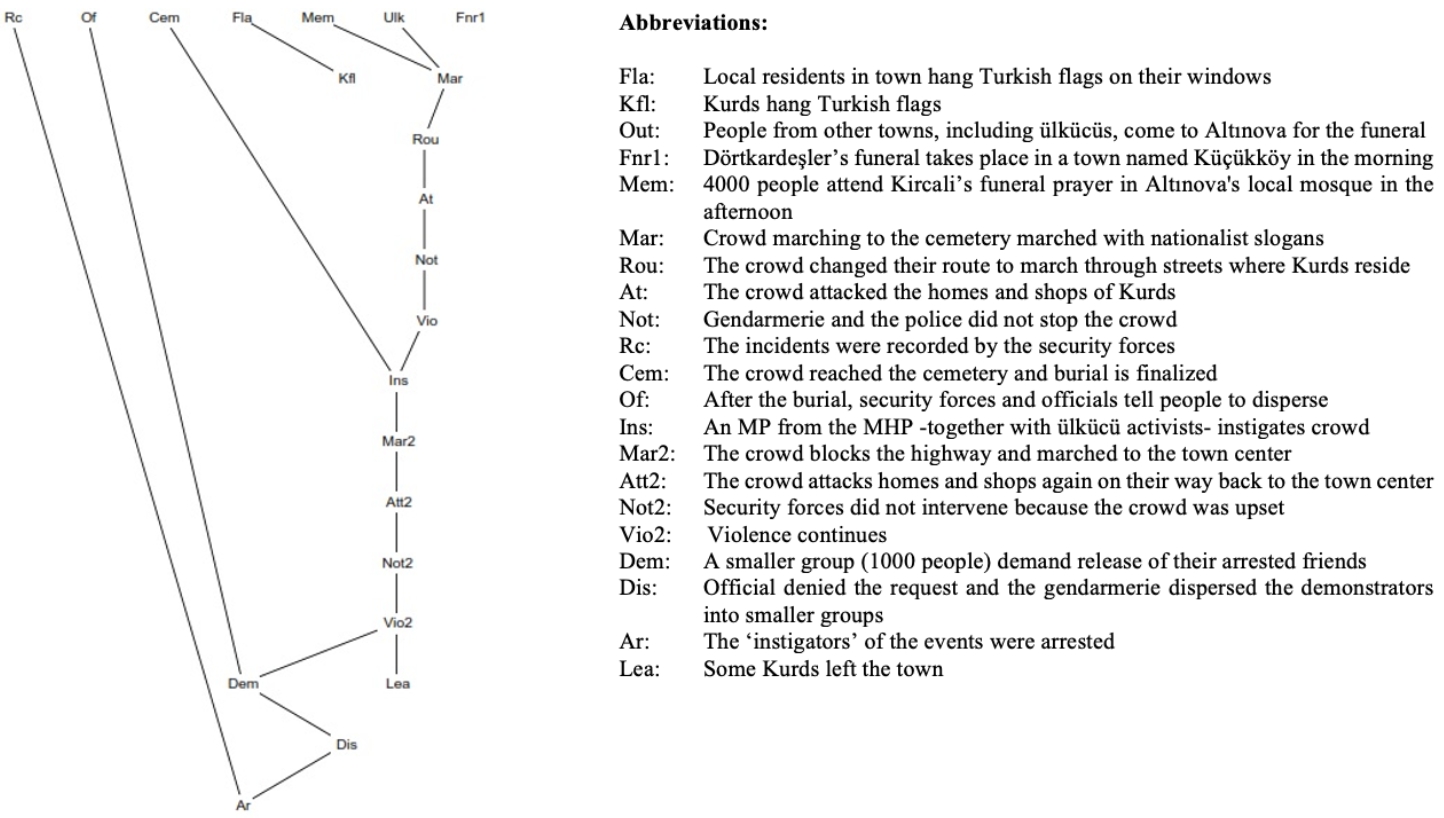
Figure 3.Generalized Event Structures, Day 1 and Day 2
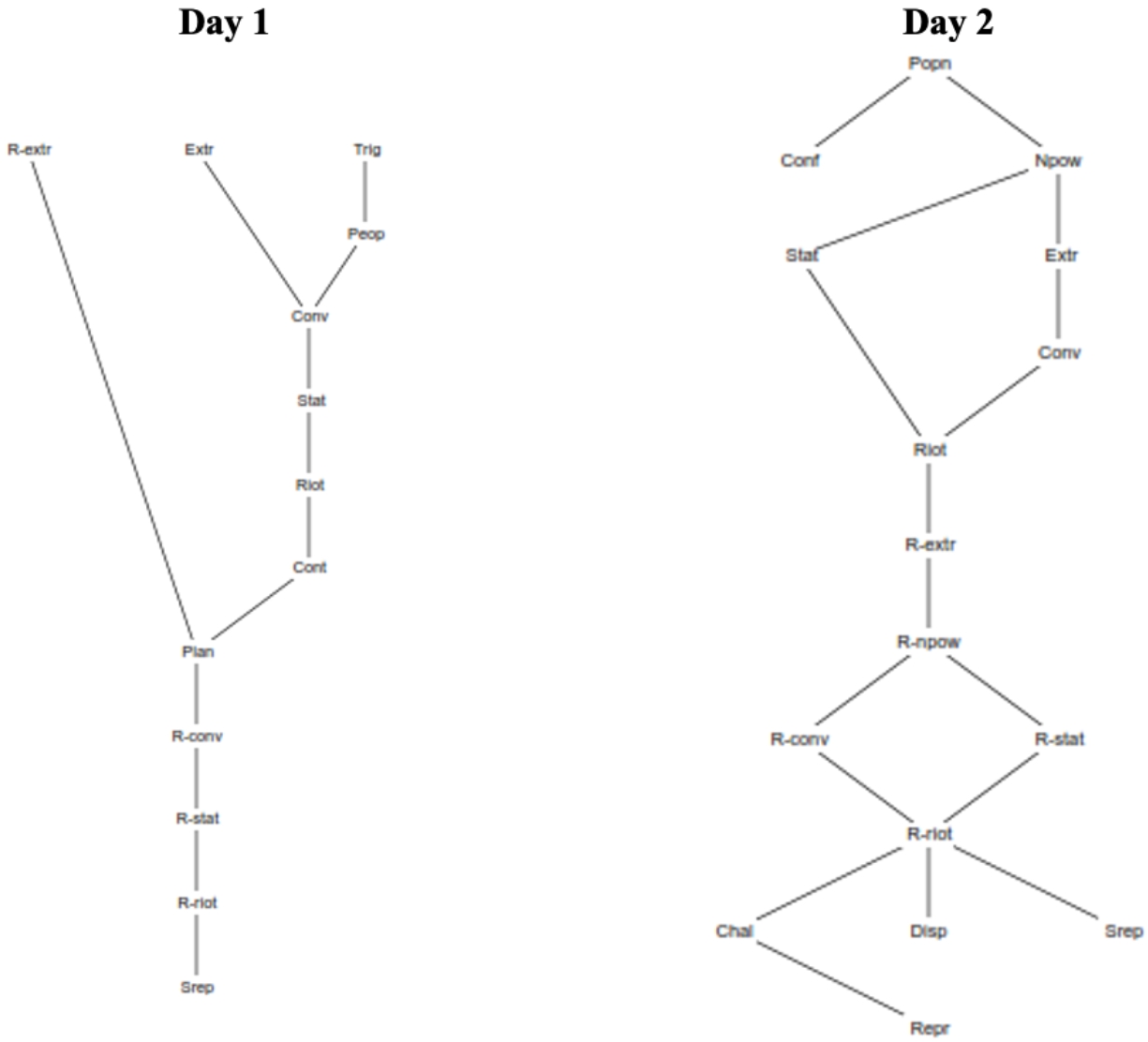
Table 1.Concrete Actions and Their General Meaning, Altınova Riots, Day 1
Table 1.
|
Concrete Action |
General Meaning |
|
O.Dortkardes and E. Kircali were killed by a Kurdish resident (Kill) |
Triggering event reinforcing ethnic conceptions (Trig) |
|
Local residents gathered (Gat) |
Crowd formation by ordinary people (Peop) |
|
Some people instigated the gathering crowd (Ins) |
Right wing/fascist organization (Extr) |
|
The crowd attacked shops and homes of the Kurds (Att) |
Conversion of protest into violence (Conv) |
|
Commander did not take the call seriously and told him that things are not serious (Rea) |
State support/consent for nationalist violence (Stat) |
|
The gendarmerie did not intervene sufficiently (Not) |
State support/consent for nationalist violence (Riot) |
|
Violence continued (Vio) |
Riotous violence |
|
Additional security personnel came to the town (Sec) |
State containment of riots (Cont) |
|
Later in the evening, 200-300 started to march with slogans (Mar) |
Right wing/fascist organization (R-extr) |
|
Electricity in Kurdish neighborhoods was shut down (Ele) |
Violence planning (Plan) |
|
The crowd attacked the Kurdish shops and homes again (Att2) |
Conversion of protest into violence (R-conv) |
|
The gendarmerie told the group to disperse but did not intervene effectively (Not2) |
State support/consent for nationalist violence (R-stat) |
|
The group continued their attack throughout the evening (Vio2) |
Riotous violence (R-riot) |
|
15 people who were ‘leading’ the events were arrested (Pun) |
Selective "repression" (Srep) |
Table 2.Concrete Actions and Their General Meaning, Altınova Riots, Day 2
Table 2.
|
Concrete Action |
General Meaning |
|
Local residents in town hang Turkish flags on their windows (Fla) |
Symbolic display of popular nationalism (Popn) |
|
Kurds hang Turkish flags (Kfl) |
Kurds confirming to Turkish nationalism (Conf) |
|
People from other towns, including ulkucus, come to Altınova for the funeral (Out) |
Right wing/fascist organization (Extr) |
|
Crowd marching to the cemetery marched shouting “Altınova is and will remain ours” (Mar) |
Display of ethnic/national power through collective action (Npow) |
|
The crowd attacked the homes and shops of Kurds (Att) |
Conversion of protest into violence (Conv) |
|
Gendarmerie and the police did not stop the crowd (Not) |
State support/consent for nationalist violence (Cons) |
|
Violence continued (Vio) |
Riotous violence (Riot) |
|
An MP from the extreme right party instigates crowd (Ins) |
Right wing/fascist organization (R-extr) |
|
The crowd continues marching, blocks the highway and marching to the town center (Mar2) |
Display of ethnic/national power through collective action (R-npow) |
|
The crowd attacks homes and shops again on their way back to the town center (Att2) |
Conversion of protest into violence (R-conv) |
|
Security forces did not intervene because the crowd was upset (Not2) |
State support/consent for nationalist violence (R-cons) |
|
Violence continued (Vio2) |
Riotous violence (Riot2) |
REFERENCES
- Akçay, Ü. (2021). Authoritarian consolidation dynamics in Turkey. Contemporary Politics, 27(1), 79–104. https://doi.org/10.1080/13569775.2020.1845920
- Brass, P. R. (2003). The production of Hindu-Muslim violence in contemporary India. University of Washington Press.
- Brown, C. (2000). The role of employers in split labor markets: An event-structure analysis of racial conflict and AFL organizing, 1917-1919. Social Forces, 79(2), 653–681. https://doi.org/10.1093/sf/79.2.653
- Das, V. (1985). Anthropological knowledge and collective violence: The riots in Delhi, November 1984. Anthropology Today, 1(3), 4–6. https://doi.org/10.2307/3033122
- De Leon, C., Desai, M., & Tuğal, C. (2009). Political articulation: Parties and the constitution of cleavages in the United States, India, and Turkey. Sociological Theory, 27(3), 193–219. https://doi.org/10.1111/j.1467-9558.2009.01345.x
- Dhattiwala, R., & Biggs, M. (2012). The political logic of ethnic violence: The anti-Muslim pogrom in Gujarat, 2002. Politics & Society, 40(4), 481–514. https://doi.org/10.1177/0032329212461125
- Ergin, M. (2014). The racialization of Kurdish identity in Turkey. Ethnic and Racial Studies, 37(2), 322–341. https://doi.org/10.1080/01419870.2012.729672
- Fearon, J. D., & Laitin, D. D. (1999). Weak states, rough terrain, and large-scale ethnic violence since 1945 [Paper presentation] Annual Meeting of the American Political Science Association, Atlanta, GA, USA.
- Franzosi, R. (1995). The puzzle of strikes: Class and state strategies in postwar Italy. Cambridge University Press. https://doi.org/10.1017/CBO9780511571534
- Gambetti, Z. (2007). Linç girişimleri, neo-liberalizm ve güvenlik devleti [Lynching attempts, neoliberalism, and the security state]. Toplum ve Bilim, (109), 7–34.
- Griffin, L. J. (1993). Narrative, event-structure analysis, and causal interpretation in historical sociology. American Journal of Sociology, 98(5), 1094–1133. https://doi.org/10.1086/230140
- Griffin, L. J. (2007). Historical sociology, narrative and event-structure analysis: Fifteen years later. Sociologica, 1(3), 1–15. https://doi.org/10.2383/25956
- İnsan Hakları Derneği (2008). Altınova Beldesinde Meydana Gelen Olaylara İlişkin İHD Heyeti Araştırma ve İnceleme Raporu [Research and investigation report of the IHD delegation concerning the events that occurred in Altınova township]. https://www.ihd.org.tr/icerik/altinova-beldesinde-meydana-gelen-olaylara-iliskin-ihd-heyetiarastirma-ve-inceleme-raporu
- Heller, P. (2020). The age of reaction: Retrenchment populism in India and Brazil. International Sociology, 35(6), 590–609. https://doi.org/10.1177/0268580920949979
- Heydarian, R. J. (2017). The rise of Duterte: A populist revolt against elite democracy. Springer.
- Horowitz, D. L. (2001). The deadly ethnic riot. University of California Press.
- Kumral, Ş (2017). Ballots with bullets: Elections, violence, and the rise of extreme right in Turkey. Journal of Labor and Society, 20(2), 231–261. https://doi.org/10.1111/wusa.12287
- Kumral, Ş (2024). Collective action, democratization, and violence: Dynamics of anti-Kurdish riots in Turkey. Qualitative Sociology, 47(1), 123–152. https://doi.org/10.1007/s11133-023-09552-8
- Mamdani, M. (2001). When victims become killers: Colonialism, nativism and the genocide in Rwanda. Princeton University Press.
- Mann, M. (2004). Fascists. Cambridge University Press.
- Mazlum-Der (2008, October 4). Balıkesir, Ayvalık-Altınova beldesi olayları MAZLUMDER gözlem raporu [MAZLUMDER observation report on the incidents in Altınova township, Ayvalık, Balıkesir]. https://mazlumder.org/balikesir-ayvalik-altinova-beldesi-olaylari-mazlumder-gozlem-raporu-7560
- Sidel, J. (2006). Riots, pogroms, jihad: Religious violence in Indonesia. Cornell University Press.
- Tambiah, S. J. (1996). Leveling crowds: Ethnonationalist conflicts and collective violence in South Asia. University of California Press.
- Tilly, C. (2003). The politics of collective violence. Cambridge University Press.
- Petersen, R. (2002). Understanding ethnic violence: Fear, hatred, and resentment in Twentieth- Century Eastern Europe. Cambridge University Press.