Abstract
Over the past few decades, sociology has experienced significant thematic and structural changes due to the rapid advancement of technology, growing social inequality, and changing forms of mobility and governance. The period 2010–2024 offers a significant window, spanning post-2008 economic restructuring, platform capitalism, COVID-19, and shifts in digital data infrastructures. Using bibliometric data and transformer-based topic modeling analysis, this study examines authorship patterns, institutional concentration, and thematic developments in 101,005 sociology articles published between 2010 and 2024. Our findings reveal that the University of Oxford leads in publication output (910 papers), while Ethnic and Racial Studies is the most prolific journal (3,214 papers). Gender distribution among authors is nearly balanced (50.4% female, 49.6% male), though ethnicity analysis shows significant disparities with White, non-Latino researchers comprising 61% of authorship. BERTopic analysis identified ten major research topics, with social theory and financial critique emerging as the dominant theme (9,016 documents). Temporal analysis demonstrates declining prominence of traditional theoretical topics and growing interest in mental sociology and gender studies. By mapping these patterns, the study offers an empirical foundation for understanding how sociology responds to broader societal changes and contributes to debates on equity, disciplinary boundaries, and future research trajectories.
-
Keywords: Sociology; Topic Modeling; BERTopic; Research Trends; Author Demographics; Scholarly Communication; Computational Social Science
Introduction
Over the past two decades, contemporary societies have undergone profound transformations driven by digitalization, globalization, and disruptions such as the COVID-19 pandemic, and sociology as a discipline has likewise evolved to respond to these changing social conditions (
Burawoy, 2005;
Castells, 2009;
Ward, 2020). Sociology has also expanded its methodological toolkit, incorporating computational approaches alongside traditional qualitative and quantitative methods (
Edelmann et al., 2020;
Macanovic, 2022). Systematic examination of publication patterns has become an increasingly valuable tool for mapping the intellectual landscape of academic disciplines, revealing patterns of scholarly production, institutional hierarchies, and thematic evolution (
Chen, 2017;
Yan & Zhiping, 2023). What is known from prior work in sociology, which primarily focuses on pre-2000 data, includes analyses of collaboration networks (e.g., finding an increasing number of co-authors over time and a higher likelihood of co-authored publications in particular areas such as social welfare, health/medicine, and family, as well as with quantitative methods and secondary data) (
Hunter & Leahey, 2008;
Moody, 2004), and subfield-specific trends (e.g., growth in particular areas of sociology including social welfare, health/medicine, organizations, social planning/policy, and family) (
Moody, 2004). In addition, while male-solo and all-male collaboration-authored papers have declined, collaboration with female authors has increased over time (
Hunter & Leahey, 2008).
Despite these advances, there are still few systematic large-scale analyses of sociology's changing demographic makeup and thematic priorities, encompassing a wide range of sociology journals. A thorough mapping of the discipline's intellectual structure across several dimensions is rare, although smaller-scale bibliometric studies have looked at particular prestigious sociology journals, such as
American Journal of Sociology and
American Sociological Review (
Hunter & Leahey, 2008) or limited historical periods. Whether the discipline's thematic diversity responds to current social challenges and which theoretical and empirical topics have gained or lost prominence in recent years are still important questions. Furthermore, thorough quantitative documentation of these patterns throughout the entire discipline is still lacking, despite anecdotal evidence suggesting persistent disparities in scholarly representation by institutional affiliation and ethnicity. Additionally, the impact of technological and methodological innovations on sociology's research landscape has not been adequately characterized through systematic bibliometric analysis. Understanding these patterns is essential for assessing sociology's responsiveness to social change, identifying potential blind spots, and promoting more inclusive and representative knowledge production.
In order to fill these gaps, this study combines the analysis of 101,005 article abstracts with comprehensive bibliometric data from 225 sociology journals. Existing research focused on collaboration networks before 2000 (
Ali et al., 2020;
Hunter & Leahey, 2008;
Moody, 2004;
Phelan, 2000), overlooking rapid post-2000 changes like digitalization and pandemics. Significant structural and technological changes have altered how people interact, work, communicate, and form perceptions over these years via the spread of smartphones and social media platforms (
Castells, 2009). Simultaneously, this time frame includes significant policy changes, demographic shifts, and growing social inequality, all of which have an impact on attitudes, actions, and public discourse (
Atkinson, 2016;
Piketty, 2014). Significant exogenous shocks, such as the COVID-19 pandemic, which exacerbated preexisting disparities and altered daily life with paradigm shifts, changes in work (e.g., expansion of remote work, proliferation of platform work), and digital engagement (e.g., online learning, seeking various information online), are also captured in the timeframe (
Alzueta et al., 2021;
Howe et al., 2020;
Maqsood et al., 2021;
Ng et al., 2021). By focusing on 2010–2024, the study can trace these interconnected social changes and analyze how broader structural forces shape individual experiences and public narratives.
Our research has three primary objectives: First, we examine the institutional and publication landscape of sociology by identifying the most productive universities and journals, thereby mapping the discipline's infrastructural foundations. Second, we analyze the demographic composition of sociology researchers by gender and ethnicity to assess progress toward inclusive scholarly participation and identify persistent disparities. Third, we use a sophisticated topic modeling method (BERTopic) to find significant thematic clusters, follow their development over time, and analyze semantic connections between topics. By combining these analytical aspects, we present a comprehensive picture of modern sociology that highlights both its structural injustices and intellectual diversity, providing insights for academics, organizations, and journals looking to comprehend and influence the field's future course.
Data and Methods
We initially collected extensive bibliometric data from 166,943 papers published in 225 Sociology journals using the OpenAlex API (
https://openalex.org/). These journals are indexed by Clarivate Journal Citation Reports (
https://jcr.clarivate.com/jcr/browse-journals) from 2010 to 2024. Bibliometric data includes journal titles, article titles, authors, affiliations, IDs, keywords, publication dates, DOI, and other relevant information. From the initial collected data, we extracted 101,005 English-language journal and proceedings articles to identify major research trends in this field.
To identify the universities and journals that have primarily conducted sociology research and to analyze the gender and ethnicity composition of authors, we conducted researcher and journal profile analyses. We explored the top 10 universities and journals by paper counts, and the gender and ethnicity ratios of researchers affiliated with papers. We determined researchers' gender (‘male’ or ‘female’) and ethnicity (‘Asian, non-Latino,’ ‘Black, non-Latino,’ ‘White, non-Latino,’ and ‘Hispanic Latino’) using the Namsor API (
https://namsor.app/), an online onomastic tool that infers these characteristics from names (
Sebo, 2023). For example, “Donghun Kim” is identified as “male” and “Asian, non-Latino.”
To identify major topic trends in Sociology research, we used a transformer-based topic modeling method, BERTopic (
Grootendorst, 2022). BERTopic uses sentence embeddings and clustering to automatically identify coherent topics in large-scale text data. It provides interpretable topic representations and allows dynamic exploration of how topics evolve over time (
Zheng et al., 2025). This topic model utilizes embedded Bidirectional Encoder Representations from Transformers (BERT) to train on text data and generate deep semantic vectors. Subsequently, it applies the Uniform Manifold Approximation and Projection (UMAP) algorithm for dimensionality reduction of these vectors. The resulting word vectors are grouped into clusters using Hierarchical Density-Based Spatial Clustering (HDBSCAN). Finally, class-based Term Frequency-Inverse Document Frequency (c-TF-IDF) refines the granularity of topic clusters and extracts relevant topic information. In this study, we identified the top 10 topics from abstract data and their annual proportions that highlight the main trends in Sociology research.
Findings
Institutional Landscape and Demographic Composition of Sociology Research
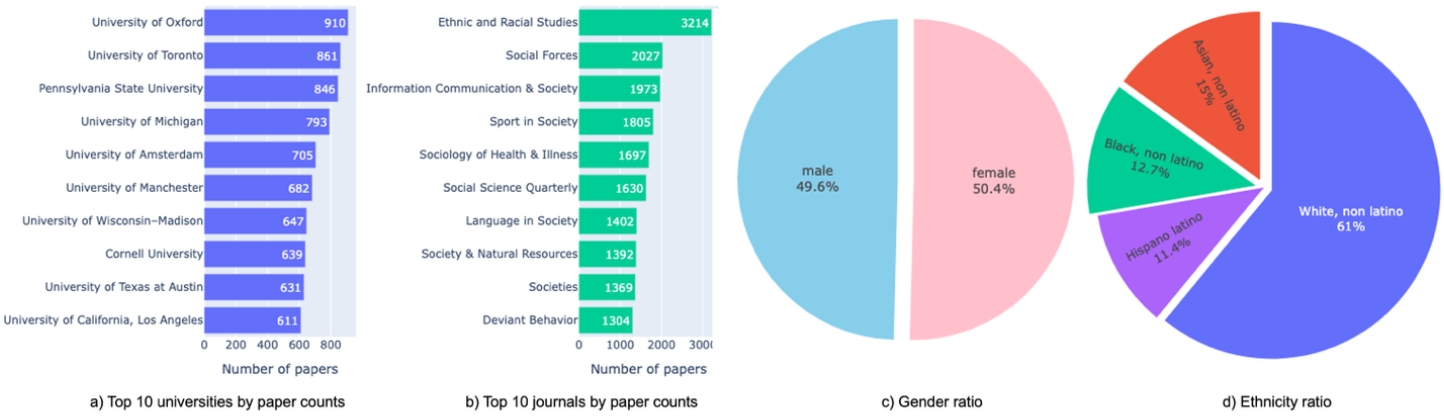
Figure 1 presents a comprehensive overview of the institutional and demographic characteristics of sociology research between 2010 and 2024. Panel (a) reveals the geographical and institutional concentration of sociological scholarship, with the University of Oxford leading in publication output at 910 papers, followed closely by the University of Toronto (861 papers) and Pennsylvania State University (846 papers). The top 10 institutions are predominantly located in North America and Western Europe, with seven universities from the United States, two from the United Kingdom, and one from the Netherlands. This distribution demonstrates the continued dominance of Anglo-American institutions in shaping the global sociology research agenda. Notably, the publication counts show relatively modest differences between the top-ranked institutions, with the range spanning from 611 to 910 papers, suggesting a moderately distributed rather than highly concentrated publication landscape among elite universities.
Panel (b) demonstrates the journal landscape, where Ethnic and Racial Studies emerges as the most prolific outlet with 3,214 papers—substantially exceeding other journals. Social Forces ranks second with 2,027 papers, followed by Information Communication and Society (1,973 papers) and Sport in Society (1,805 papers). The prominence of Ethnic and Racial Studies aligns with sociology's increasing engagement with issues of diversity, inequality, and social justice over the study period. The top 10 journals represent considerable thematic diversity, encompassing specialized areas such as health sociology, language, environmental concerns, and deviant behavior, alongside general sociology journals like Social Science Quarterly and Societies. This diversity suggests that sociological research is published across a broad spectrum of specialized and generalist venues, reflecting the discipline's multifaceted intellectual character.
Panel (c) reveals a nearly balanced gender composition among sociology researchers, with female authors representing 50.4% and male authors 49.6% of the sample. This near-parity represents a significant achievement in gender equity compared to many other academic disciplines and underscores decades of efforts to promote women's participation in sociology.
However, panel (d) exposes substantial disparities in ethnic representation, with White, non-Latino researchers comprising 61% of authorship—a clear majority. Asian, non-Latino scholars account for 15.0%, while Black, non-Latino (12.7%) and Hispanic Latino (11.4%) researchers each represent approximately 11-13% of authors. These patterns indicate that while sociology has achieved gender balance, significant challenges remain in achieving ethnic and racial diversity that commensurate with either global population demographics or the diverse societies that sociology studies. The overrepresentation of White scholars may influence research priorities, theoretical frameworks, and the populations and phenomena deemed worthy of sociological investigation.
Major Thematic Clusters in Sociology Research
Table 1 presents the ten major topics identified through BERTopic analysis, revealing both the thematic diversity and intellectual priorities of contemporary sociology. Topic 1, "Social theory and financial critique," emerges as the dominant cluster with 9,016 documents—nearly double the size of any other topic. This substantial concentration reflects sociology's continued engagement with classical theoretical traditions (Weber, Durkheim, Marx, Bourdieu, Foucault) and their application to contemporary economic crises. The representative terms bridge theoretical abstraction with empirical engagement, indicating that foundational theory remains vital for interpreting financial capitalism, neoliberalism, and protest movements. This theoretical dominance contrasts sharply with the more empirically focused topics that follow, suggesting that much sociological work continues to be organized around classical frameworks.
Topics 2 through 6 represent core substantive areas with relatively similar document counts (4,266–4,677), indicating balanced attention across multiple domains. Topic 2 addresses religion and secularization, examining diverse faith traditions alongside processes of secularization, with particular attention to Islam, Christianity, and their intersection with identity politics. Topic 3 on sports and fandom might initially appear disconnected from traditional sociological concerns, yet its emphasis on gender performance, embodiment, and collective identity formation links it conceptually to broader questions of social reproduction and cultural practice. Topic 4, focusing on family and life-course dynamics, represents demography's heartland—fertility, marriage, parenting, and gendered divisions of labor—with strong reliance on longitudinal quantitative methods. Topic 5 captures sociology's response to digital transformation, examining how platforms, algorithms, and surveillance reshape everything from collective action to labor markets, effectively updating classical concerns about media and social control for the algorithmic age.
Topic 6, addressing race, ethnicity, and political issues, integrates electoral politics with educational inequality and demonstrates sociology's engagement with contemporary political moments (Obama, Trump, 2016, election). The presence of intersectionality frameworks indicates theoretical sophistication in examining how racial dynamics intersect with other forms of stratification. Topics 7 and 8, while smaller in document count (3,835–4,111), represent rapidly growing areas responding to contemporary challenges. Environmental sociology and food systems (Topic 7) bridges traditional rural sociology with urgent ecological concerns including climate change, sustainability, and resource governance, while incorporating food studies' attention to consumption practices and culinary culture. Gender and LGBTQ+ Studies (Topic 8) encompasses diverse sexual and gender identities alongside feminist theoretical frameworks, examining both intimate relationships and structural inequalities, indicating sociology's increasing attention to sexual and gender diversity beyond binary categories.
The two smallest topics reveal sociology's engagement with social control and political boundaries. Topic 9 on criminology, deviance, and social control encompasses sustained attention to mass incarceration, particularly its racialized and gendered dimensions, while expanding to include contemporary forms of deviance like cyberbullying. Topic 10 addresses nationalism, citizenship, and migration with strong European and Middle Eastern geographic concentration, examining tensions between inclusive and exclusionary models of belonging during migration crises and the rise of nationalist politics.
Together, these final topics illustrate how sociology examines boundaries—both physical borders and symbolic boundaries of acceptable behavior—and their enforcement through state institutions. The substantial variation in topic sizes, from 9,016 documents in social theory to 3,472 in nationalism studies, reveals both the enduring centrality of theoretical work and the relative marginalization of certain substantive areas despite their contemporary political salience.
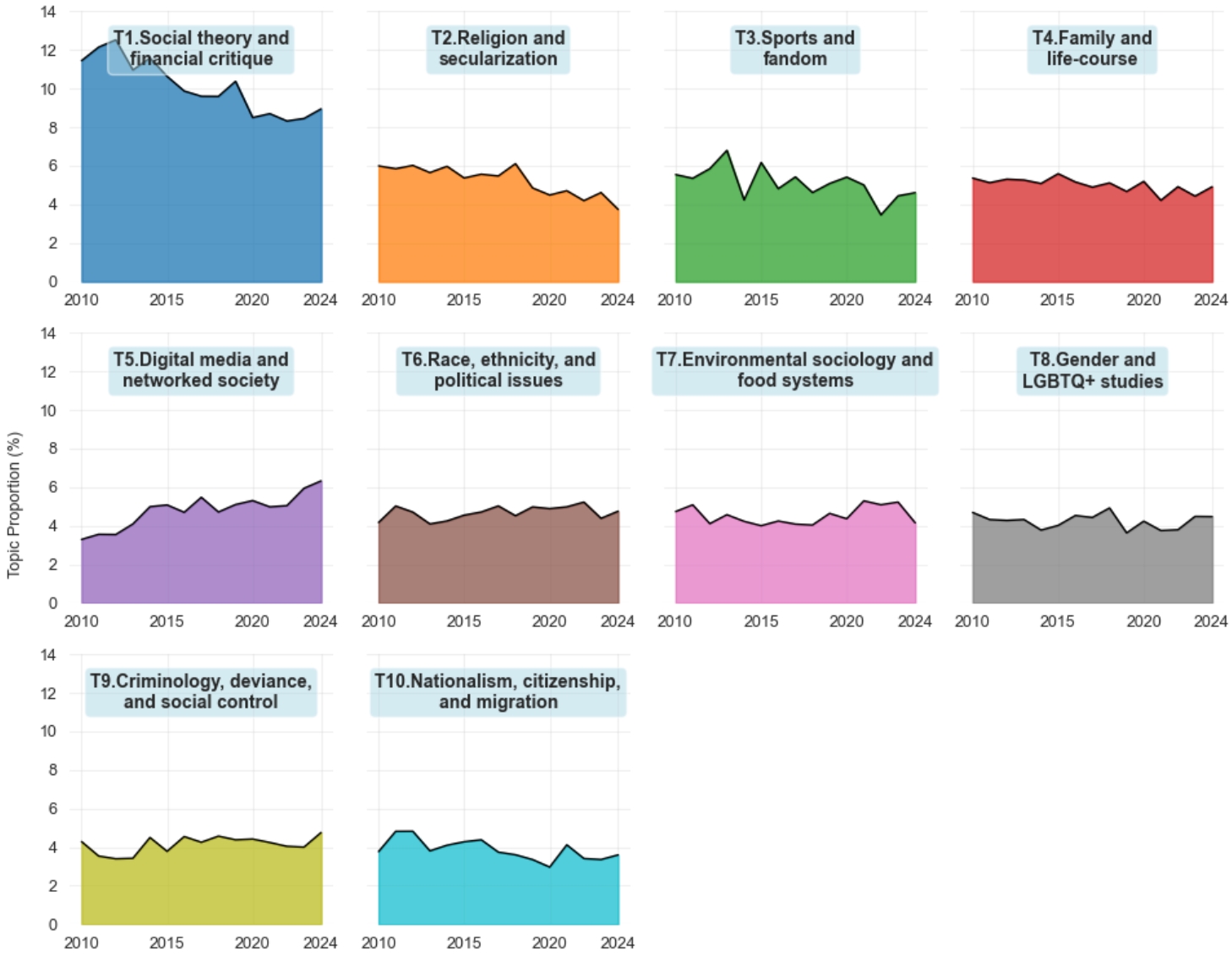
Figure 2 illustrates the annual proportion trends for each of the ten major topics from 2010 to 2024, revealing how sociology's intellectual priorities have shifted in response to social, economic, and political transformations. The most dramatic pattern is the clear dominance and subsequent decline of Topic 1 (social theory and financial critique), which begins at approximately 11.5% in 2010, peaks at over 12% in 2012, and then undergoes a sustained decline to approximately 8.5% by 2022 before a slight recovery. This trend probably reflects the waning use of social theory as different research techniques, such as computer techniques, have emerged. The trajectory also highlights sociology's early, intense involvement with the global financial crisis of 2008 and its aftermath, at which time theoretical frameworks analyzing capitalism, markets, and economic crises became critically important. The peak in 2012 coincides with the European debt crisis and Occupy Wall Street movements, which mobilized sociological attention to financial capitalism and protest. However, the subsequent steady decline suggests that as the immediate crisis receded, sociological attention diversified toward other pressing concerns, even as economic inequality remained central to public discourse.
Other topics that show a declining trend, though not as rapid as Topic 1, include Topic 2 (religion and secularization), Topic 3 (sports and fandom), Topic 4 (family and life-course), and Topic 10 (nationalism, citizenship, and migration). Topic 2 (religion and secularization) shows modest variation, with slight upticks around 2014 and 2018, possibly suggesting heightened attention to Islamophobia, religious nationalism, and the role of religion in polarized politics. Among these topics, Topic 3 (sports and fandom) demonstrates some ups and downs, with a spike in 2013, possibly corresponding to increased sociological attention surrounding the 2012 London Olympics, followed by another increase during subsequent Olympic periods. Topic 10 (nationalism, citizenship, and migration) was another topic that shows fluctuations, possibly correspond to the European refugee crisis and Brexit referendum. Overall, these areas exhibit a slow but consistent decrease in topic proportions from 2010 to 2024, suggesting a relative waning of traditional or institution-centered sociological concerns.
There were some topics characterized by relative stability over time, including Topic 6 (race, ethnicity, and political issues), Topic 7 (environmental sociology and food systems), Topic 8 (gender and LGBTQ+ studies), and Topic 9 (criminology, deviance, and social control). Among them, Topic 7 shows a modest increasing trend in the post–COVID-19 period, possibly reflecting heightened sociological attention to food security, sustainability, and environmental risk following the pandemic. Although not very pronounced, Topic 9 (criminology, deviance, and social control) exhibits some fluctuations, likely reflecting periodic surges in scholarly attention to police violence and social control, such as during the emergence of the Black Lives Matter movement in 2013, its heightened visibility in 2014–2015, and its resurgence in 2020 following George Floyd’s murder. Overall, these topics show consistent representation, fluctuating within a relatively narrow range of approximately 4–5% each. This stability suggests that these areas have maintained steady scholarly attention over the past 15 years.
Topic 5 (digital media and networked society) was the only topic that showed a clear upward trajectory over time, with a sustained increase since the mid-2010s. Beginning at approximately 3% in 2010, the proportion of this topic nearly doubled by 2024. This pattern aligns with the rapid expansion of social media platforms, algorithmic governance, and platform capitalism during this period, indicating that sociological research has increasingly engaged with the social consequences of digital transformation.
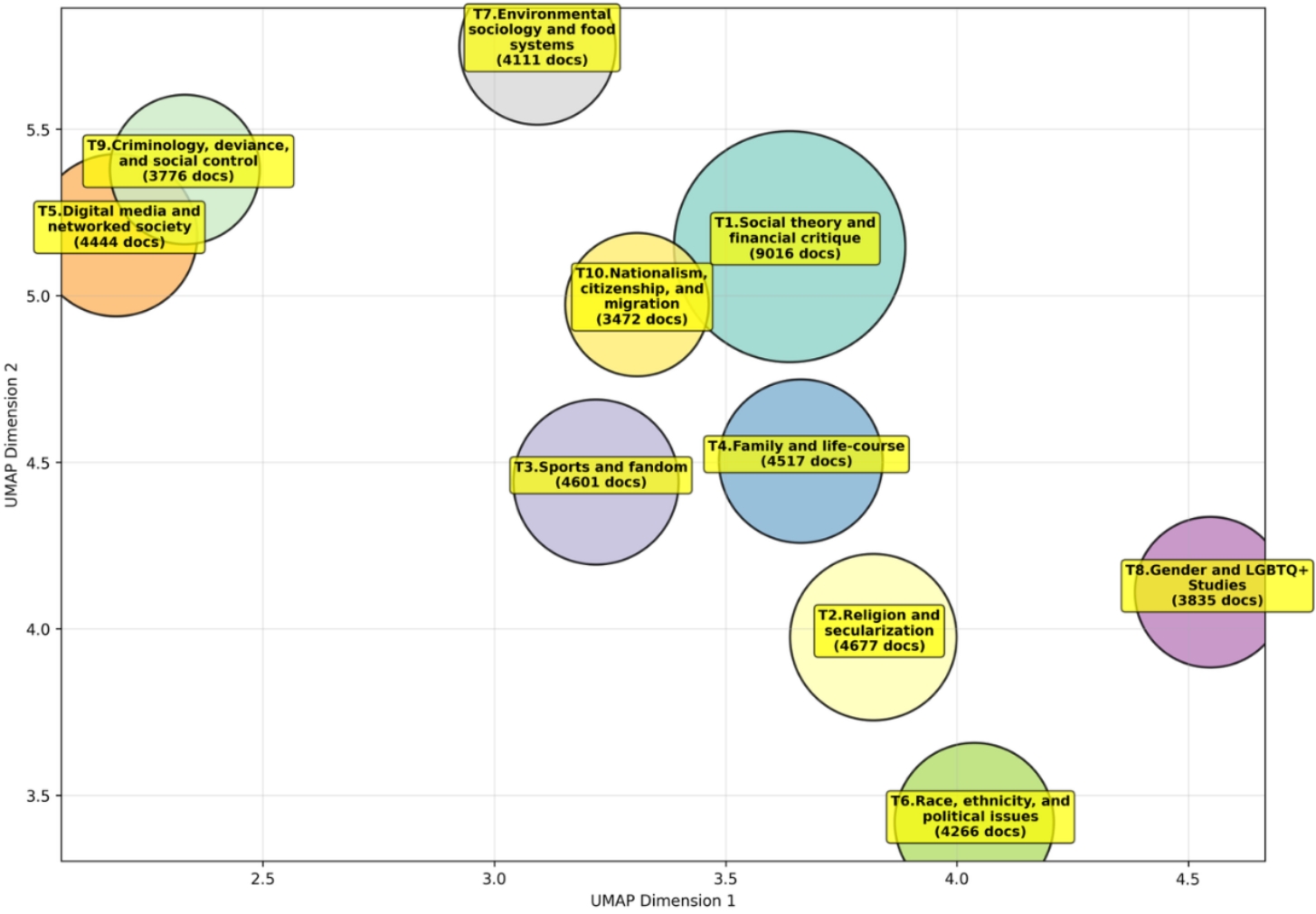
The semantic proximity of the ten main topics is represented in two dimensions in
Figure 3, which shows significant thematic overlap and patterns of intellectual affinity using UMAP. The spatial arrangement shows that sociological topics form interconnected clusters that demonstrate shared conceptual vocabularies, methodological approachesㅇㅇ, and substantive concerns rather than existing in isolation. The bubble sizes in the visualization correspond to document counts, with Topic 1’s substantially larger size reinforcing its intellectual dominance, while the spatial distribution reveals that even the largest topics maintain some degree of semantic distance from one another, indicating genuine thematic diversity rather than redundancy in contemporary sociology.
The dense central cluster where Topic 1 (social theory and financial critique) and Topic 10 (nationalism, citizenship, and migration) converge in the middle-right section of the semantic space is the most notable feature. This indicates social theory’s function as an integrative framework that is closely connected to multiple substantive areas of neighboring topics (e.g., sports and fandom and family and life-course), particularly those related to nationalism, citizenship, and migration, as evidenced by this central positioning. We also find another notable overlap between Topic 5 (digital media and networked society) and Topic 9 (criminology, deviance, and social control) in the upper-left section of the semantic space. This proximity likely reflects shared analytical attention to online deviance, surveillance, and social control in digitally mediated environments, which have become increasingly salient in the context of platformization and the expansion of online social interactions, particularly after the COVID-19 pandemic.
As a sign of their relative semantic independence from mainstream theoretical and methodological traditions, several topics occupy more peripheral positions in semantic space. For example, Topic 7 (environmental sociology and food systems) appears in the upper-left area, relatively isolated from other clusters, which may reflect its interdisciplinary orientation drawing on ecology, geography, and agricultural sciences. The peripheral placement of Topic 8 (gender and LGBTQ+ studies) on the right side of the map suggests the use of distinctive theoretical frameworks rooted in feminist and queer theory rather than core sociological paradigms. Finally, Topic 6 (race, ethnicity, and political issues), located in the lower-right region and spatially separated from the central cluster, indicates a relatively distinct semantic structure, potentially reflecting its strong grounding in political sociology, critical race theory, and race-centered analytical traditions.
Discussion
This comprehensive bibliometric analysis of 101,005 sociology articles published between 2010 and 2024 depicts a discipline characterized by both intellectual diversity and persistent structural inequalities. Our findings demonstrate that sociology's institutional landscape remains concentrated in elite Anglo-American and Western European universities, with the University of Oxford, University of Toronto, and Pennsylvania State University leading in publication output. While gender parity has been achieved, substantial ethnic disparities persist, with White, non-Latino scholars comprising about two-thirds of authorship. Topic modeling identified ten major research clusters, with social theory and financial critique dominating at 9,016 documents, followed by more balanced attention to religion, sports, family, digital media, race, environment, gender, criminology, and nationalism.
Our patterns highlight both continuities and transformations in sociology's intellectual project. The persistent centrality of social theory, despite its declining proportion, suggests that classical frameworks—Marx, Weber, and Durkheim—continue structuring sociological imagination, consistent with arguments about sociology's "canon" serving as shared interpretive resources (
Connell, 1997). However, the decline also supports claims about sociology's "empirical turn" and growing methodological pluralism that prioritizes data-driven analysis over grand theorizing (
Sørensen, 1998;
Teplitskiy, 2016). The achievement of gender parity represents a remarkable transformation from the male-dominated discipline of earlier decades (
Hunter & Leahey, 2008), demonstrating feminist scholars who demanded institutional change and recognition of women's intellectual contributions. Yet the stark ethnic disparities, with White scholars dominating authorship, underscore persistent exclusions that scholars like Du Bois identified over a century ago, revealing how sociology's knowledge production continues to confirm rather than transcend broader structures of racial inequality (
Bhambra, 2014;
Morris, 2015).
The thematic landscape identifies sociology’s engagement with contemporary challenges while maintaining traditional concerns. By examining trajectories of topical change over time, we find a rapid decline in social theory and financial critique. Yet our semantic clustering also reveals a familiar tension: social theory remains positioned at the center of the discipline, while more specialized subfields are dispersed toward the periphery. Overall, we find that many stable trajectories of sociology’s “core themes” continue to be related to fundamental issues of class, race, gender, social interaction, and social movements, as reflected in the persistence of topics such as family, religion, and deviance (
Keith & Ender, 2004). These persistent core themes suggest that sociology retains a degree of intellectual continuity over time. At the same time, we observe a rapid increase in the topic of digital media and networked society, indicating a growing disciplinary engagement with digitally mediated social relations, and the transformation of social life in the digital era (
van Dijck et al., 2018).
The findings offer an empirical map of sociology's development over the past decade, highlighting both structural trends and theme changes. The apparent concentration of research output among a few universities and journals raises questions about inclusion and epistemic diversity within the subject, demonstrating how institutional stratification continues to impact knowledge production. However, persisting racial disparities in authorship show persistent inequities in access to scholarly publication pipelines, despite sociology's longstanding commitment to studying inequality. The thematic stability of major themes as well as shifts toward digital media, the environment, and migration show how sociological research adapts to broader social, political, and technological developments.
This study carries significant implications for multiple stakeholders in sociology and academic publishing. For individual sociology scholars, our findings highlight which research areas are saturated versus underexplored, potentially informing strategic decisions about research agendas and career development. The declining proportion of theoretical work suggests opportunities for innovative theoretical contributions tackle contemporary phenomena insufficiently represented by traditional frameworks, especially concerning algorithmic governance, the climate crisis, and post-pandemic social transformations. For journal editors and publishers, the demographic disparities we documented—particularly the stark underrepresentation of scholars from Black, Latino, and Asian backgrounds—demand active intervention through diversified editorial boards, targeted recruitment of reviewers and authors from underrepresented groups, and critical examination of gatekeeping practices that may inadvertently reproduce racial hierarchies. The dominance of elite Anglo-American institutions suggests that prestigious journals may be channeling resources and visibility toward already-privileged universities, reinforcing global inequalities in knowledge production.
For academic institutions and funding agencies, our findings underscore the need for policies that promote both demographic diversity and intellectual pluralism. Universities should examine whether their hiring, promotion, and resource allocation practices support diverse scholarly communities and emerging research areas like environmental sociology that address urgent social challenges. The geographic concentration of productivity in North America and Western Europe raises questions about whose social realities are deemed worthy of sociological attention and whether the discipline adequately incorporates perspectives from the Global South. Funding agencies might consider prioritizing collaborative international research that decenters Anglo-American perspectives and supports scholars in regions currently marginalized from mainstream sociology. More broadly, these findings illuminate how disciplinary knowledge production reproduces and potentially reinforces broader social inequalities, suggesting that sociology must reflexively examine its own institutional practices if it seeks credibility in critiquing inequality elsewhere.
There are a number of limitations to this study that should be noted. First, our analysis is restricted to journals indexed in Clarivate's Journal Citation Reports, potentially excluding important work published in regional journals, non-English outlets, books, or emerging open-access platforms. This may underrepresent Korean, Asian, or Global South scholarship, limiting generalizability. Second, demographic information on authors—especially regarding race and ethnicity—is constrained by incomplete or inconsistent metadata, which may obscure more nuanced patterns of inequality. Third, topic modeling inevitably simplifies complex subfields, and algorithmic clustering may overlook emerging concepts or region-specific research agendas. Finally, although productivity indicators provide a structural overview, they cannot fully capture theoretical depth, methodological innovation, or the localized social concerns that are increasingly relevant to Korean and Asian sociology.
Despite these limitations, the study offers several notable strengths. It integrates bibliometric analysis with transformer-based topic modeling across more than 100,000 articles, providing an unprecedented large-scale view of contemporary sociology. The combined examination of institutional concentration, journal productivity, author demographics, and thematic evolution allows for a comprehensive understanding of disciplinary dynamics. Importantly, by mapping global trends in sociology, this study offers valuable comparative context for scholars in Korea and the broader Asian region, positioning the new journal, Social Constellations: A World Perspective, within the international landscape of sociological research. The 2010–2024 timespan captures a period of significant social, political, and technological upheaval, making the findings directly relevant for understanding how sociology responds to rapid societal change.
Future research could expand the scope of this study in several promising directions. First, incorporating Korean-language journals and other non-English publications would help illuminate regional knowledge production and diversify the global understanding of sociology. Second, improved demographic data—including intersectional identifiers and early-career classifications—would enable deeper analysis of inequalities in authorship and collaboration. Third, combining topic modeling with citation networks or co-authorship analyses could offer richer insights into intellectual influence and scholarly communities. Finally, studies should expand beyond journal articles to include books, edited volumes, and conference proceedings, which may illuminate different authorship patterns and thematic priorities. Comparative analyses across disciplines could illuminate whether sociology's demographic composition and intellectual trends differ meaningfully from related fields like anthropology, political science, or cultural studies.
Notes
Figure 1.Top 10 Universities, Journals, and Ratios of Gender and Ethnicity in Sociology Research
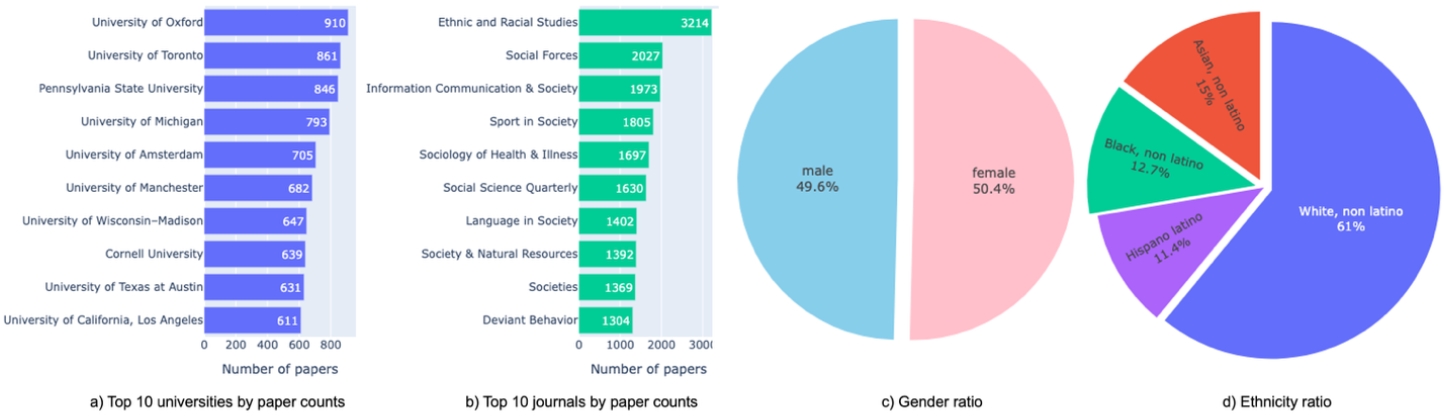
Figure 2.Temporal Dynamics and Evolving Research Priorities
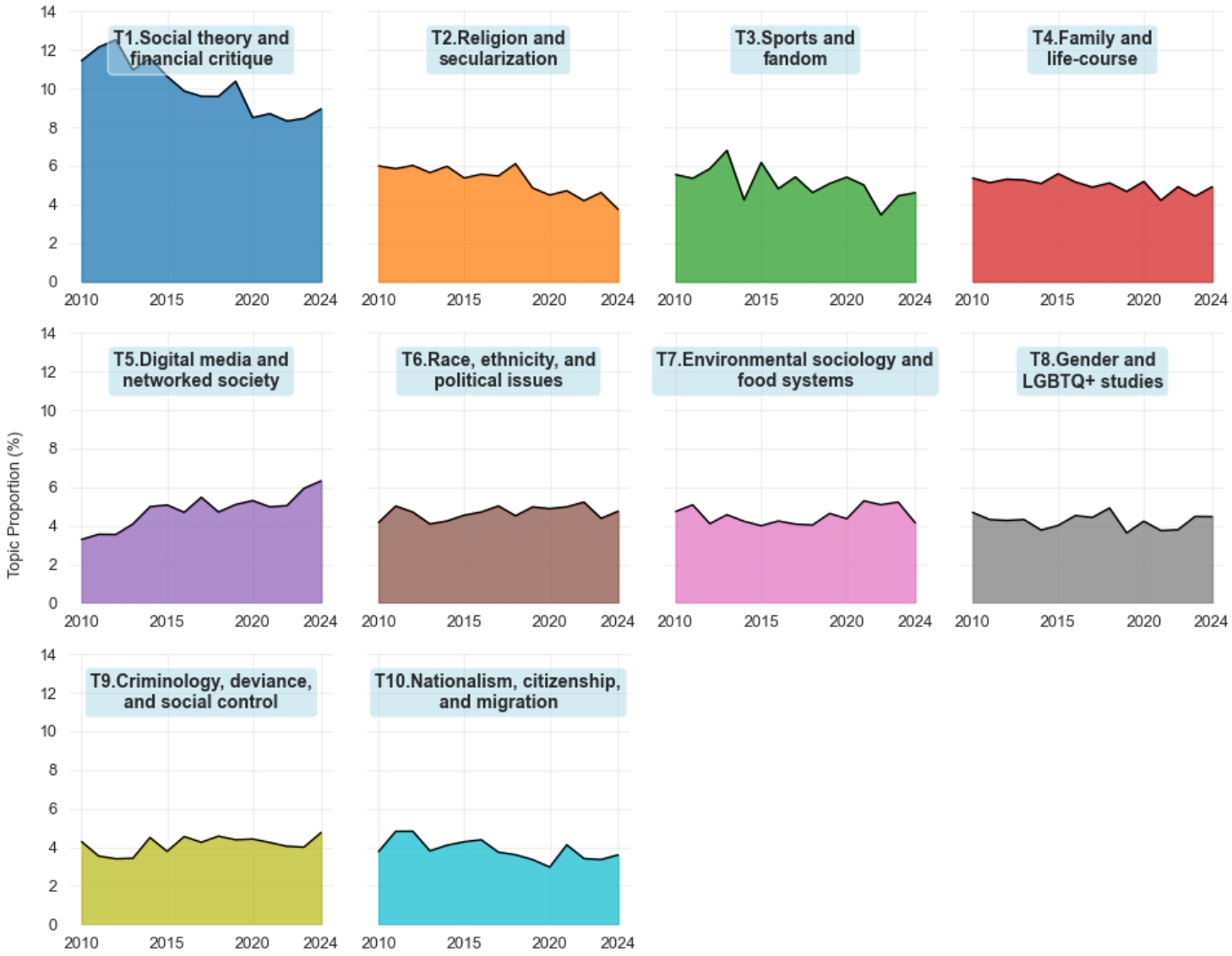
Figure 3.Semantic Proximity among Major Topics
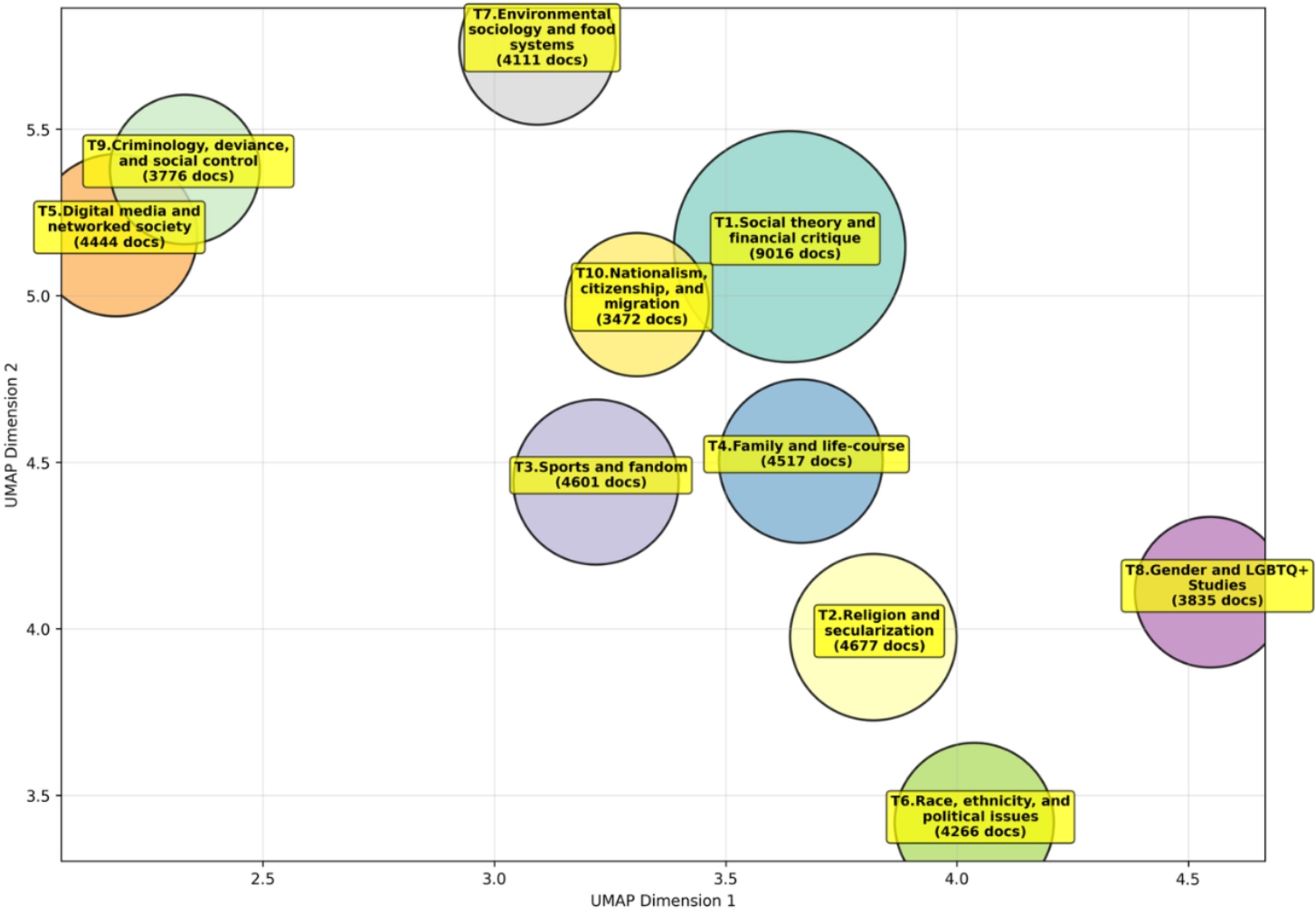
Table 1.Top 10 Topics in Sociology Research
Table 1.
|
Topic |
Count |
Label |
Representative keywords |
|
1 |
9,016 |
Social theory and financial critique |
'theories', 'financial', 'weber', 'philosophy', 'marx', 'democracy', 'finance', 'ethnography', 'capitalism', 'durkheim', 'bourdieu', 'foucault' |
|
2 |
4,677 |
Religion and secularization |
'religion', 'muslim', 'religiosity', 'christian', 'islam', 'faith', 'catholic', 'secularization', 'spiritual', 'secularism' |
|
3 |
4,601 |
Sports and fandom |
'sports', 'football', 'athletes', 'league', 'fandom', 'boxing', 'baseball', 'fitness', 'leagues', 'competition', 'gender', 'identity' |
|
4 |
4,517 |
Family and life-course |
'family', 'children', 'mothers', 'fertility', 'fathers', 'parental', 'marriage', 'parents', 'household', 'earnings' |
|
5 |
4,444 |
Digital media and networked society |
'media', 'digital', 'internet', 'network', 'online', 'news', 'communication', 'technologies', 'twitter', 'mobile' |
|
6 |
4,266 |
Race, ethnicity, and political issues |
'racial', 'ethnic', 'diversity', 'discrimination', 'immigrants', 'election', '2016', 'Obama', ‘trump’, 'voting', 'multiracial', 'minority', 'disparities' |
|
7 |
4,111 |
Environmental sociology and food systems |
'food', 'farmers', 'rural', 'water', 'conservation', 'agriculture', 'organic', 'ecological', 'fishing', 'nutrition' |
|
8 |
3,835 |
Gender and LGBTQ+ studies |
'gender', 'gay', 'queer', 'masculinity', 'transgender', 'feminist', 'lgbtq', 'heterosexual', 'bisexual', 'homophobia' |
|
9 |
3,776 |
Criminology, deviance, and social control |
'criminology', 'violence', 'prison', 'victimization', 'trafficking', 'homeless', 'legal', 'ipv', 'rape', 'deviance', 'punishment', 'enforcement' |
|
10 |
3,472 |
Nationalism, citizenship, and migration |
‘nationalism', 'european', 'israel', 'ethnic', 'citizenship', 'immigration', 'welfare', 'immigrant', 'minority', 'transnational' |
REFERENCES
- Atkinson, A. B. (2016). Inequality: What can be done? (Working Paper No. 2). International Inequalities Institute, The London School of Economics and Political Science. https://doi.org/10.31235/osf.io/x2ryr
- Ali, I., Sabir, I., & Leghari, I. U. (2020). Knowledge production patterns of environmental sociology: A bibliometric analysis of top journals of sociology. Pakistan Social Sciences Review, 4(2), 936–958. https://doi.org/10.35484/pssr.2020(4-ii)76
- Alzueta, E., Perrin, P., Baker, F. C., Caffarra, S., Ramos‐Usuga, D., Yuksel, D., & Arango‐Lasprilla, J. C. (2021). How the COVID‐19 pandemic has changed our lives: A study of psychological correlates across 59 countries. Journal of Clinical Psychology, 77(3), 556–570. https://doi.org/10.1002/jclp.23082
- Bhambra, G. K. (2014). A sociological dilemma: Race, segregation and US sociology. Current Sociology, 62(4), 472–492. https://doi.org/10.1177/0011392114524506
- Burawoy, M. (2005). For public sociology. American Sociological Review, 70(1), 4–28. https://doi.org/10.5771/0038-6073-2005-4-347
- Castells, M. (2009). The rise of the network society. Willey-Blackwell. https://doi.org/10.1002/9781444319514
- Chen, C. (2017). Science mapping: A systematic review of the literature. Journal of Data and Information Science, 2(2), 1–40. https://doi.org/10.1515/jdis-2017-0006
- Connell, R. W. (1997). Why is classical theory classical?. American Journal of Sociology, 102(6), 1511–1557.
- Edelmann, A., Wolff, T., Montagne, D., & Bail, C. A. (2020). Computational social science and sociology. Annual Review of Sociology, 46(1), 61–81. https://doi.org/10.1146/annurev-soc-121919-054621
- Grootendorst, M. (2022). BERTopic: Neural topic modeling with a class-based TF-IDF procedure. arXiv, https://doi.org/10.48550/arxiv.2203.05794
- Howe, D. C., Chauhan, R. S., Soderberg, A. T., & Buckley, M. R. (2020). Paradigm shifts caused by the COVID-19 pandemic. Organizational Dynamics, 50(4), 100804. https://doi.org/10.1016/j.orgdyn.2020.100804
- Hunter, L., & Leahey, E. (2008). Collaborative research in sociology: Trends and contributing factors. The American Sociologist, 39(4), 290–306. https://doi.org/10.1007/s12108-008-9042-1
- Keith, B., & Ender, M. G. (2004). The sociological core: Conceptual patterns and idiosyncrasies in the structure and content of introductory sociology textbooks, 1940-2000. Teaching Sociology, 32(1), 19–36. https://doi.org/10.1177/0092055x0403200102
- Macanovic, A. (2022). Text mining for social science - The state and the future of computational text analysis in sociology. Social Science Research, 108, 102784. https://doi.org/10.1016/j.ssresearch.2022.102784
- Maqsood, A., Abbas, J., Rehman, G., & Mubeen, R. (2021). The paradigm shift for educational system continuance in the advent of COVID-19 pandemic: Mental health challenges and reflections. Current Research in Behavioral Sciences, 2, 100011. https://doi.org/10.1016/j.crbeha.2020.100011
- Moody, J. (2004). The structure of a social science collaboration network: Disciplinary cohesion from 1963 to 1999. American Sociological Review, 69(2), 213–238. https://doi.org/10.1177/000312240406900204
- Morris, A. (2015). The scholar denied: WEB Du Bois and the birth of modern sociology. University of California Press.
- Ng, M. A., Naranjo, A., Schlotzhauer, A. E., Shoss, M. K., Kartvelishvili, N., Bartek, M., Ingraham, K., Rodriguez, A., Schneider, S. K., Silverlieb-Seltzer, L., & Silva, C. (2021). Has the COVID-19 pandemic accelerated the future of work or changed its course? Implications for research and practice. International Journal of Environmental Research and Public Health, 18(19), 10199. https://doi.org/10.3390/ijerph181910199
- Phelan, T. J. (2000). Bibliometrics and the evaluation of Australian sociology. Journal of Sociology, 36(3), 345–363. https://doi.org/10.1177/144078330003600305
- Piketty, T. (2014). Capital in the twenty-first century. Harvard University Press.
- Sebo, P. (2023). How well does NamSor perform in predicting the country of origin and ethnicity of individuals based on their first and last names?. PLOS One, 18(11), e0294562. https://doi.org/10.1371/journal.pone.0294562
- Sørensen, A. B. (1998). Theoretical mechanisms and the empirical study of social processes. In P. Hedström & R. Swedberg (Eds.), Social mechanisms: An analytical approach to social theory (pp. 238–266). Cambridge University Press. https://doi.org/10.1017/cbo9780511663901.010
- Teplitskiy, M. (2016). Frame search and re-search: How quantitative sociological articles change during peer review. The American Sociologist, 47(2), 264–288. https://doi.org/10.1007/s12108-015-9288-3
- van Dijck, J., Poell, T., & De Waal, M. (2018). The platform society: Public values in a connective world. Oxford University Press.
- Ward, P. R. (2020). A sociology of the Covid-19 pandemic: A commentary and research agenda for sociologists. Journal of Sociology, 56(4), 726–735. https://doi.org/10.1177/1440783320939682
- Yan, L., & Zhiping, W. (2023). Mapping the literature on academic publishing: A bibliometric analysis on WOS. SAGE Open, 13(1), 21582440231158562. https://doi.org/10.1177/21582440231158562
- Zheng, X., Wu, Q., Luo, X., & Lv, K. (2025). Analyzing the evolutionary trajectory of technological themes based on the BERTopic model: A case study in the field of artificial intelligence. PLOS One, 20(6), e0324933. https://doi.org/10.1371/journal.pone.0324933